

Federal Retrofit Incentives Remain Promised but Undelivered as Spring Planning Season Opens
 Ryan May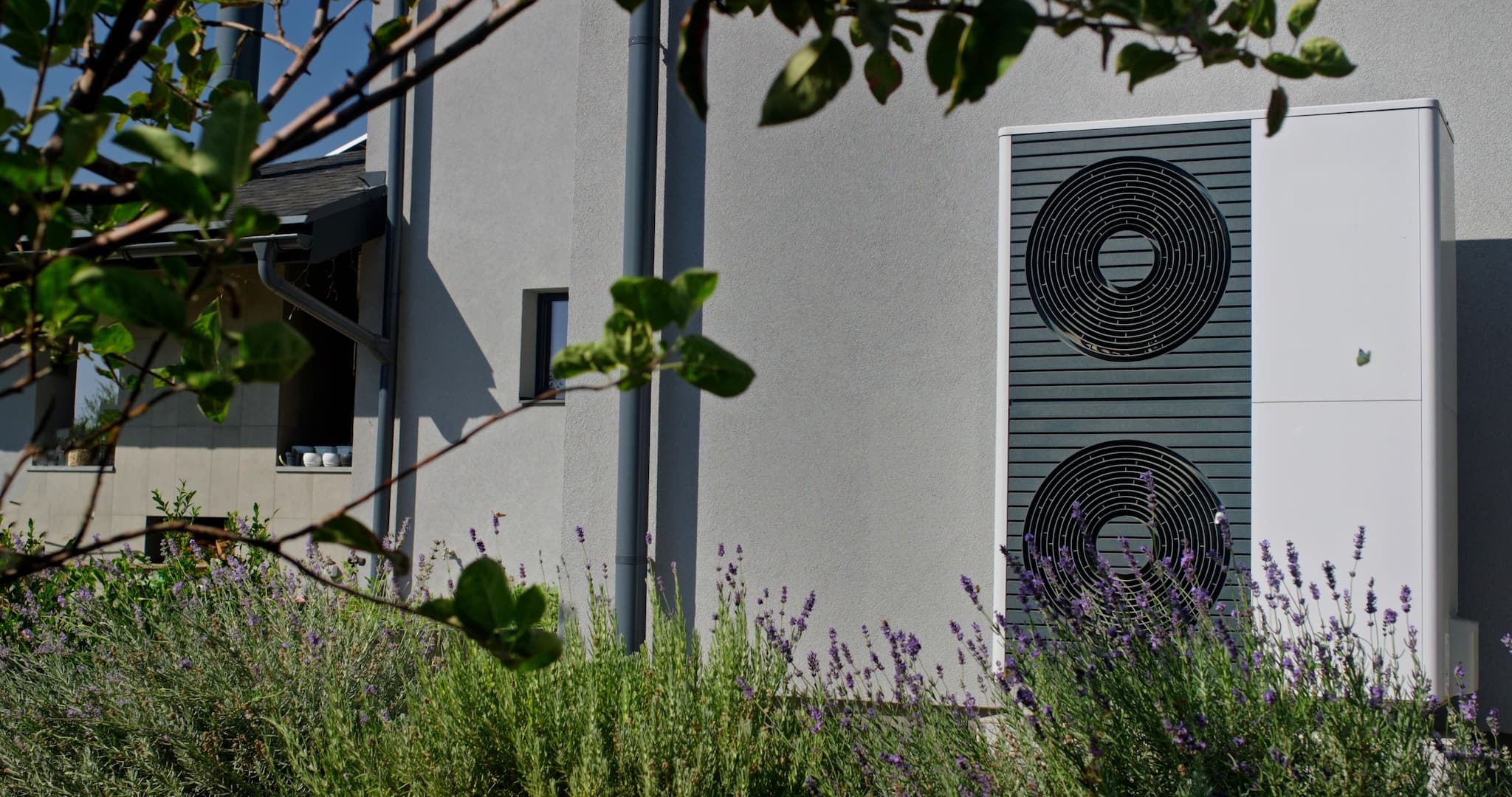
A modern home's air source heat pump is highlighted, showcasing sustainable living supported by the Canada Greener Homes Grant initiative. (Source: PointForm AI)
The most popular federal home energy retrofit program in Canadian history has been closed for more than two years. On April 1, 2026, Prime Minister Mark Carney told reporters in Wakefield, Quebec that he remains committed to bringing it back — but offered no launch date, no budget allocation, and no updated eligibility rules. For homeowners sitting on quotes for heat pumps, insulation, or new windows, the message is the same one they have been hearing since the Liberal leadership race: it is coming. Eventually.
That gap between commitment and delivery is the story. The Greener Homes Grant once provided up to $5,000 per household for energy-efficient upgrades. It funded more than 229,000 heat pump installations and 145,000 window and door replacements before closing its doors to new applicants in February 2024. The oil-to-heat pump program — a separate initiative offering up to $10,000 or more for households switching off heating oil — remains active but limited in scope. Meanwhile, renovation material costs have climbed roughly 39% over four years, and retaliatory tariffs on American-made windows, doors, and heat pumps are adding fresh price pressure heading into the busiest renovation season of the year.
This is what we know, what remains unknown, and what Canadian homeowners should be watching for.
Speaking to reporters in Quebec, Carney reiterated promises first made during his Liberal leadership campaign: restarting the Greener Homes Grant for lower-income households, exploring additional retrofit discounts for low- and medium-income homeowners, and strengthening the existing oil-to-heat pump program. He framed the delay as intentional redesign, telling media that his government wants to "refresh" these programs so they are as impactful as possible.
What he did not provide is everything a homeowner actually needs to plan: when the refreshed program will launch, how much funding will be allocated, whether the eligibility criteria will change, or what the new per-household grant cap will be. The original program capped at $5,000. Whether the successor matches, exceeds, or narrows that figure is entirely unknown.
The absence of a timeline is not new — it is a pattern. More than a year after Carney took office, the retrofit incentives he promised during the leadership race remain undelivered. This contrasts with other climate pledges that have already moved forward: federal electric vehicle purchase subsidies were reinstated, and new EV charging station investments were announced. Home retrofits, which affect a far larger share of Canadian households, have not received the same urgency.
Former environment minister Steven Guilbeault acknowledged that discussions about reviving the programs are underway but that no final decisions have been made. That is a more cautious framing than Carney's campaign-era promises — and it is worth noting the distinction.
The Canada Greener Homes Grant launched in 2021 and received over 590,000 applications representing more than $2 billion in committed funds before closing to new applicants in February 2024. As of January 2026, approximately 405,000 households had completed retrofits and received a grant, with an average payout of roughly $4,400.
The program is now in its administrative wind-down phase. The window for existing approved applicants to submit final documentation for reimbursement closed at the end of December. Natural Resources Canada had not provided a final tally of total program costs at the time the original reporting was published. For homeowners who were not already in the pipeline, the original grant is no longer available — there is nothing to apply to.
The Greener Homes Grant is not paused. It is closed. No new applications are being accepted. Carney's commitment is to launch a successor program — not to reopen the existing one. The design, eligibility, and funding level of that successor have not been announced.
The Oil to Heat Pump Affordability (OHPA) program is the one federal retrofit incentive that is currently operational. Launched in early 2023, it provides upfront payments of up to $10,000 to low- and median-income households that heat with oil, with enhanced grants reaching as high as $15,000 in provinces with co-funding agreements.
As of February 2025, the program had received 36,750 applications and funded 13,568 heat pump installations. Participating households reported saving an average of $1,337 per year on energy bills while cutting 2.8 tonnes of emissions annually. That is meaningful — but the program applies only to homes heating with oil, which limits its reach primarily to Atlantic Canada and parts of Quebec.
Carney's pledge to "strengthen" OHPA has not been accompanied by specifics about what strengthening means: expanded income thresholds, higher grant caps, broader fuel eligibility, or something else entirely.
In the background, a newer program is quietly operating. The Canada Greener Homes Affordability Program (CGHAP) is an $800-million initiative targeting low- to median-income homeowners and tenants. Unlike the original grant — which reimbursed homeowners after they paid for upgrades — CGHAP uses a direct-install model where selected organizations handle all logistics and costs. The homeowner pays nothing out of pocket.
Environment Minister Julie Dabrusin highlighted CGHAP as evidence of ongoing federal commitment. Currently, Manitoba is the only province where homeowners can apply. Other provinces are expected to be added over time, but no national rollout timeline has been announced.
For most Canadian homeowners — particularly those in Ontario, British Columbia, Alberta, and Quebec — CGHAP is not yet an option.
One detail Carney mentioned that has received less attention is the transfer of program responsibility from Natural Resources Canada (NRCan) to Environment and Climate Change Canada (ECCC). He described this as part of the effort to redesign and improve the programs before relaunching.
This is more than administrative reshuffling. NRCan's mandate centres on energy resource development and efficiency. ECCC's mandate is broader — climate change mitigation, environmental protection, and emissions reduction. Moving home energy programs under ECCC could mean a shift in how success is measured: from energy savings per household toward aggregate emissions reductions. It could also mean different eligibility criteria that prioritize high-emission homes or regions with the greatest carbon intensity.
What it almost certainly means is delay. Transferring program infrastructure between departments — staff, systems, delivery agreements with provinces — takes time. Keith Brooks of Environmental Defence has noted that a government official acknowledged the original program's popularity was itself a "problem" because high uptake made it expensive. A departmental transfer creates space to redesign the cost structure without the political cost of explicitly cutting a popular program.
Homeowners should watch for which department publishes the successor program's details. If ECCC launches it, the eligibility criteria and evaluation metrics may look different from the NRCan-administered original.
The timing of Carney's statement — April 1 — lands squarely in the window when Canadian homeowners are making spring renovation decisions. And the math is uncomfortable.
Canadian households spend an average of about $2,200 per year on home energy, with costs running significantly higher in oil-heated and poorly insulated homes. Delaying an upgrade means continuing to absorb those costs. But proceeding without a federal grant means paying full price at a time when material costs are elevated.
The Canadian Home Builders' Association's most recent Renovation Market Index reports that products and materials prices for residential renovation projects have risen approximately 39% over the past four years.
Separate federal data tells the same story. Statistics Canada's building construction price indexes show residential costs remain 3% higher year-over-year nationally, with material sourcing challenges creating acute pressures for specific products.
On top of that, US tariffs on construction materials — including windows, doors, heat pumps, and electric water heaters — are adding another layer of cost that did not exist when the original Greener Homes Grant was running.
Spring is peak renovation season in Canada. Contractors who handle heat pump installations, insulation, and window replacements typically book out weeks to months in advance by mid-April. Homeowners who wait for a program announcement that may not come until summer or fall risk missing the window entirely — pushing their project into the next season and absorbing another winter of high energy costs.
The CHBA's Renovation Market Index noted a Future Conditions Index of just 35.2, indicating that renovators are seeing more hesitant, price-sensitive clients. That means some contractors may have capacity right now — but the market signal is mixed. Lower backlogs could mean opportunity for homeowners ready to move, but it also reflects broader uncertainty about whether clients will commit at current prices.
There is no universal right answer. But here is how the variables stack up:
Homeowners who want to keep their options open should get an EnerGuide home energy audit now. The original Greener Homes Grant required pre- and post-retrofit audits, and a successor program will very likely require the same. Getting the audit done positions you to move quickly if and when a new program launches — and the audit results will tell you which upgrades deliver the biggest return regardless of grant availability.
The signals to monitor are straightforward:
ECCC publishing new program pages or intake dates will be the clearest sign that a successor is moving from commitment to reality. Budget 2026 — if it includes a line item for home retrofit incentives — would confirm that funding has been allocated. Provincial expansion announcements for CGHAP would signal that the no-cost retrofit model is scaling beyond Manitoba. And any communication from the Prime Minister's Office or ECCC that includes the word "applications" rather than "commitment" will mark the shift from promise to program.
Until then, homeowners are left to plan around uncertainty — which, for anyone who has been through a Canadian renovation, is at least familiar territory.