Loading and Riding the Line
If there's one skill that separates a tidy paint job from one that screams "I did it myself," it's cutting in.
"Cutting in" just means painting the edges by brush — the band where the wall meets the ceiling, the trim, the corners — before you go near a roller. The roller can't reach those last few centimetres without smearing onto the trim, so you paint that border first and the roller fills in the rest.
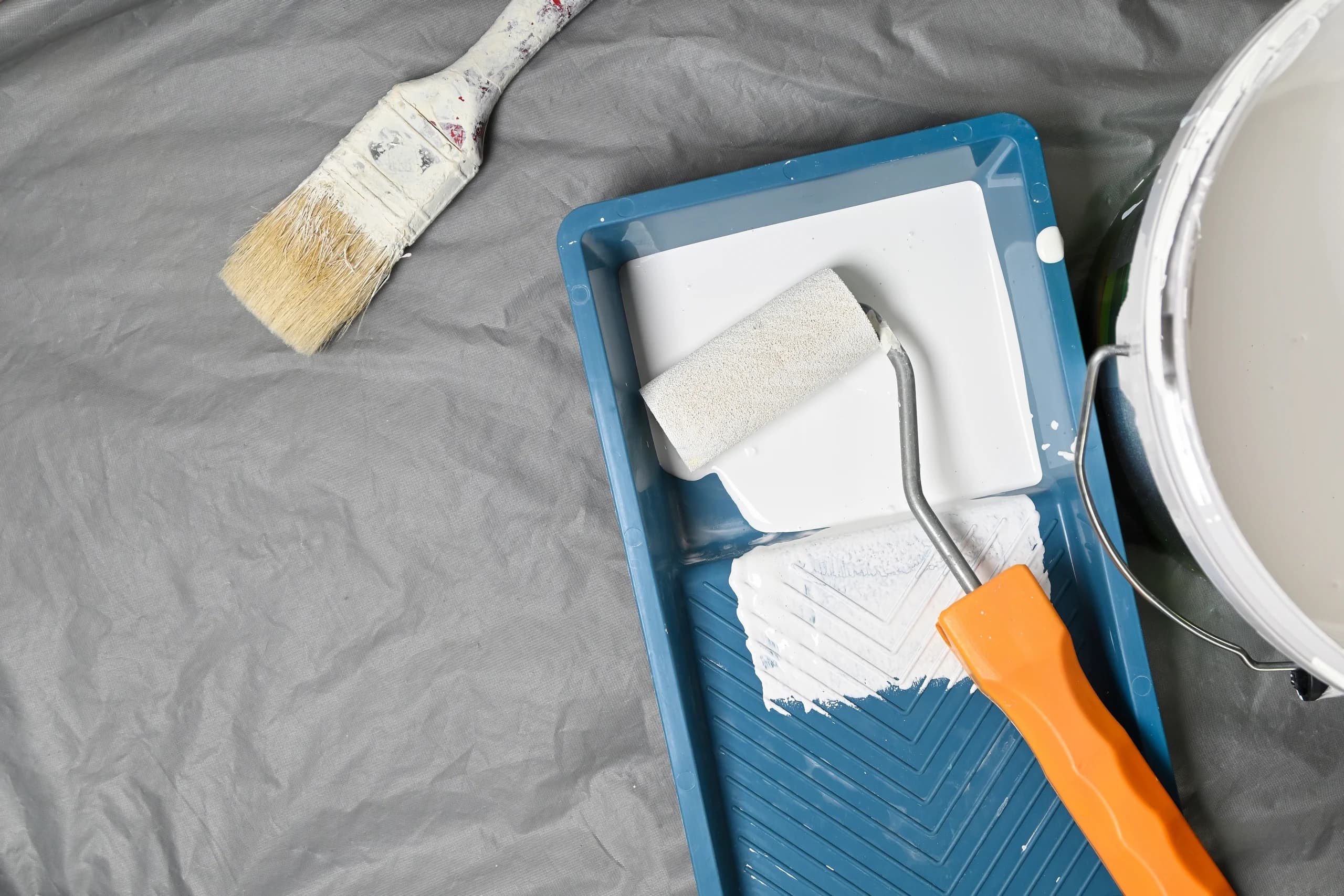
The right brush makes the biggest single difference. Reach for a 2.5-inch angled sash brush; the angled bristle edge is what lets you ride a clean line. The Purdy XL Glide and the Wooster Shortcut are two models that show up on almost every Canadian paint aisle, and either is a tool you'll keep for years.
Loading the brush is where most beginners go wrong. Don't dunk past the bristle midpoint or drag the brush up the side of the can. Instead, dip only the bottom third of the bristles, then tap each side of the brush against the inside of the can to knock drips back in. DAP Canada's interior painting guide calls this out specifically — overloading causes runs and starves the tip, while a well-tapped brush gives you twenty minutes of clean lines instead of two.
Now the move. Hold the brush like a pencil. Paint toward the line you're cutting, not away from it — the bristles lay paint down ahead of the cleaner edge instead of dragging it across. Use the angled tip to ride the seam, and cut a band roughly five to seven centimetres wide so the roller has room to overlap.
Here's the single most important thing in this guide. Cut in one wall at a time, then roll that wall before the cut-in dries. Where wet paint meets dry paint you can see the seam, and that seam is the source of most of the streaks people complain about. The brush and the roller blend invisibly when both are wet.
A small note: many guides tell you to tape your trim. Plenty of pros don't — tape can bleed underneath and sometimes pulls a thin film off when removed. Tape the ceiling line and the floor; freehand the trim once you've got a steady hand.