Tankless Water Heaters: How They Work, What They Cost, and How to Choose the Right System
A Canadian Homeowner's Complete Guide
By
Published: March 19, 2026
Credit: Shutterstock.com
Key Takeaways
•Tankless water heaters heat water only when you turn on a tap, eliminating standby losses and using roughly 30% less energy than conventional tanks — but savings depend on your household's hot-water patterns, not on the technology alone.
•Installed costs in Canada typically range from $2,800 to $7,000 depending on fuel type, venting, and retrofit complexity — roughly double the cost of a tank replacement, with payback periods that stretch well beyond a decade in many cases.
•Choosing the right system means matching flow rate capacity and temperature rise to your climate and simultaneous-use habits, not just picking the highest-rated unit on the shelf.
Water heating is the second-largest energy cost in a Canadian home, accounting for roughly 17–19% of total residential energy use. The average Canadian uses about 75 litres of hot water every day — for showers, dishwashing, laundry, and cleaning. That adds up to a significant share of your utility bill, year after year.
Tankless water heaters promise to cut into that cost by heating water only when you need it, rather than keeping a large tank hot around the clock. The pitch is compelling: lower energy bills, endless hot water, and a compact unit that frees up floor space. And for many Canadian homes, those promises hold up — under the right conditions.
But tankless systems are not a universal upgrade. They cost more upfront, they require specific installation infrastructure, and their real-world savings depend on factors most marketing materials gloss over: your local groundwater temperature, how many fixtures you run simultaneously, and whether your home's gas line or electrical panel can handle the load. This guide walks through all of it — how the technology works, what it actually costs in Canadian dollars, how to size a system for cold-climate performance, and when a tankless upgrade makes financial sense versus when it doesn't.
Advertisement — Article Continues Below
How Tankless Water Heaters Work
The On-Demand Principle
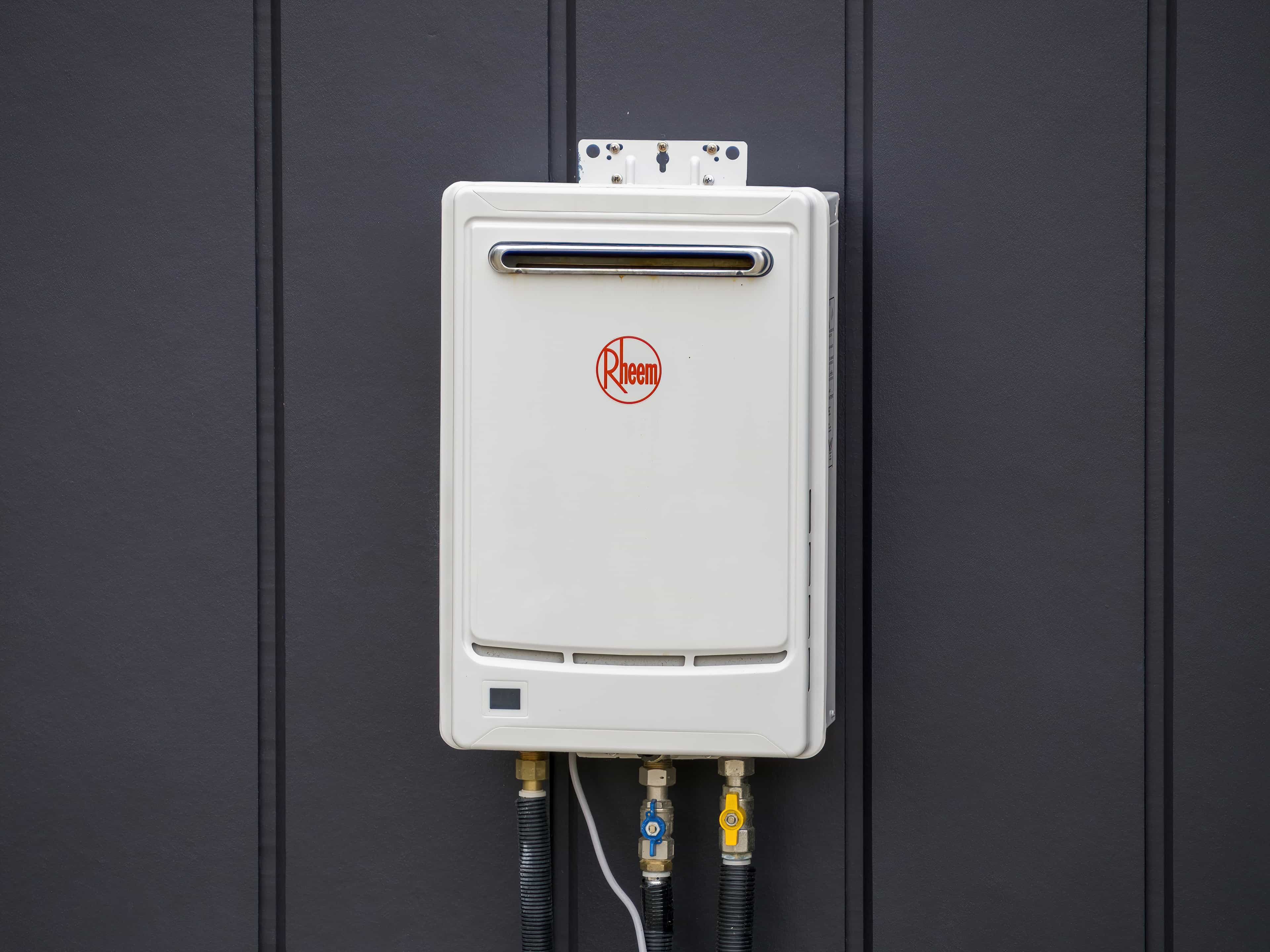
A tankless water heater — sometimes called an instantaneous or demand-type heater — does exactly what the name suggests. It heats water only as it flows through the unit. There is no storage tank maintaining a reservoir of hot water. When you open a hot-water tap, cold water enters the unit, passes over a heat exchanger powered by natural gas, propane, or electricity, and exits at your set temperature. When you close the tap, the unit shuts off.
This is fundamentally different from a conventional storage-tank heater, which keeps 40 to 60 gallons of water hot at all times — including overnight, while you're at work, and during the weeks you're on vacation. That constant reheating is called standby loss, and it's the core inefficiency that tankless systems eliminate. The U.S. Department of Energy identifies standby heat loss as the primary reason storage tanks use more energy than demand-type heaters.
What "On Demand" Does Not Mean
Here's where expectations often go sideways. "On demand" does not mean "instant." When you turn on a distant tap, the hot water still has to travel through your home's piping to reach you — exactly the same delay you'd experience with a tank. In fact, Natural Resources Canada notes that wait times for hot water can actually increase when switching to a tankless system, because the unit needs a moment to detect flow, ignite, and bring water up to temperature before it even starts its journey through the pipes.
If instant hot water at every tap is important to you, a recirculation pump — either built into the unit or added as an accessory — can solve the problem. But that's an additional cost and an additional component to maintain. It's worth knowing before you buy, not after.
Gas vs. Electric: Two Different Animals
Gas tankless heaters (natural gas or propane) dominate the Canadian whole-home market. They deliver higher flow rates, heat water faster, and can handle multiple fixtures running simultaneously. They require venting to the exterior and a gas supply line sized to their BTU input — both of which add installation complexity.
Electric tankless heaters are simpler to install and don't need venting. But whole-home electric models demand enormous amperage — often 100 to 150 amps on dedicated circuits — which can require a full electrical panel upgrade. Most Canadian homes on 100-amp or even 200-amp service may not have the spare capacity. Small electric point-of-use units (for a single sink or shower) are a different story: they're inexpensive, easy to install, and work well as supplements to an existing system.
Important
A whole-home electric tankless water heater can require three or four dedicated 40-amp breakers. If your home's electrical panel doesn't have that capacity, you're looking at a panel upgrade costing $2,000–$4,000 before the water heater itself is even installed. For most Canadian homes, gas tankless remains the more practical whole-home option.
Advertisement — Article Continues Below
Energy Efficiency and Operating Costs
The Efficiency Numbers
An ENERGY STAR certified tankless water heater uses approximately 30% less energy than a conventional storage tank, according to Natural Resources Canada. That figure reflects the elimination of standby losses and the higher combustion efficiency of modern gas units. (If you're also evaluating air conditioning upgrades, understanding SEER ratings can help you apply the same efficiency-first thinking across your home systems.)
The U.S. Department of Energy provides a wider range: 8–34% more efficient than storage tanks, depending on how much hot water a household uses. Homes that use less hot water (under about 160 litres per day) see the largest percentage gains, because the standby losses they're eliminating represent a bigger share of total energy use. High-use homes still save energy, but the percentage improvement is smaller.
Why Efficiency Doesn't Always Mean Fast Payback
This is where the conversation gets honest. A field study by the Center for Energy and Environment monitored homes alternating between storage and tankless heaters over two years. The tankless units reduced water-heating energy by about 37% — a strong result. But when they factored in the higher purchase and installation costs, the payback periods stretched to roughly 20–40 years.
That doesn't mean tankless is a bad investment. It means you need to evaluate the full picture: energy savings plus longer equipment life plus avoided tank replacement costs plus any available rebates. The savings are real. The payback timeline is just longer than the marketing suggests.
Where the Real Savings Show Up
Water heating and space heating together account for roughly 80% of residential energy consumption in Canada. Improving your water heater's efficiency is one of the highest-impact upgrades you can make — not because any single year's savings will be dramatic, but because the cumulative effect over a 20-year lifespan is substantial.
The strongest financial case for tankless emerges when you combine several factors: you're replacing an aging tank anyway, your household uses a moderate amount of hot water, your local utility offers efficiency rebates, and you plan to stay in the home long enough to benefit from the operating cost reduction.
The unit itself is the first cost layer. Canadian consumer sources report that small electric point-of-use tankless units can start around $500, while whole-home gas models typically fall between $900 and $3,000 depending on brand, efficiency rating, and flow capacity. Condensing gas units — which recover additional heat from exhaust gases and operate above 90% efficiency — sit at the higher end of that range.
Installed Project Costs
Installation is where the numbers climb. A typical whole-home tankless installation in Canada commonly ranges from about $2,800 to over $7,000, depending on:
Whether you're replacing a tank or doing a first-time tankless install (new venting, gas line modifications)
Condensing vs. non-condensing unit choice (which determines venting material and routing)
Local labour rates and permit requirements
Complexity of the retrofit (location of the unit, distance to exterior walls, gas meter capacity)
Regional examples from Canadian contractors put the range at roughly $2,800–$4,800 in the Greater Toronto Area and $3,000–$7,500 in Calgary, with most typical residential projects falling in the $3,500–$5,500 range nationally.
Tankless heaters are not maintenance-free. Professional descaling and flushing — essential for preventing mineral buildup on the heat exchanger — typically costs about $150–$200 per year in Canada. Storage tanks rarely need this kind of annual service, so this is a net new operating cost to factor into your comparison.
Cost Category
Tankless (Gas, Whole-Home)
Storage Tank (40–60 gal)
Equipment
$900–$3,000
$600–$2,000
Installed total
$2,800–$7,000
$1,100–$3,000
Annual maintenance
$150–$200
Minimal
Typical lifespan
20+ years
10–15 years
Annual energy savings vs. tank
~30% less water-heating energy
Baseline
Tip
When comparing quotes, ask for the installed price broken out into equipment, labour, venting, gas line work, and permits. A low total that bundles everything may be hiding a vague scope — and vague scope on a tankless install is where surprise costs appear.
Advertisement — Article Continues Below
Choosing the Right Tankless System
The Two Numbers That Matter Most
Tankless water heaters are rated by two metrics: flow rate (measured in gallons per minute, or GPM) and temperature rise (the difference between incoming cold water and your desired output, measured in °C or °F). The DOE's sizing guidance is straightforward: add up the flow rates of every fixture you expect to run at the same time, then determine the temperature rise your climate demands.
This is not optional. It is the difference between a system that performs and one that disappoints.
Cold-Climate Sizing: The Canadian Reality
In a Canadian winter, your incoming groundwater temperature might drop to around 5°C in southern Ontario. To reach a comfortable 49–50°C at the tap, your heater needs to deliver a temperature rise of roughly 44–45°C — at whatever flow rate your household demands.
That's a much harder job than the same heater would face in Texas, where inlet water might arrive at 20°C. This is why a unit that's marketed as "good for 3 bathrooms" might only handle one shower and a sink in January in Kitchener. Always look at the flow rate at your required temperature rise, not just the maximum flow rate printed on the box.
If you want to run a shower (2.0 GPM) and a kitchen faucet (1.5 GPM) simultaneously, you need a unit that delivers at least 3.5 GPM at a 44°C rise. A family of four that routinely runs two showers and a dishwasher at the same time is looking at 5.0–6.5 GPM — which pushes you toward a high-capacity gas unit or a two-unit setup.
The Cold-Climate Myth, Addressed
There's a persistent belief that tankless heaters simply can't handle Canadian winters. Modern gas units are designed for exactly this. Rinnai's Canadian operation reports that their units can deliver approximately 19 L/min (about 5 GPM) with groundwater as cold as 4°C — enough to serve roughly three showers simultaneously. The key is sizing the system for your actual winter conditions, not for a warm-climate spec sheet.
The choice between a condensing and non-condensing gas tankless unit has a direct impact on installation cost and complexity. Non-condensing units exhaust hot gases (around 300°F) and require stainless steel or Category III metal venting, which is expensive and must be routed to an exterior wall or roof. Condensing units extract additional heat from those exhaust gases, producing cooler exhaust (around 100°F) that can be vented through inexpensive PVC or polypropylene pipe — much easier and cheaper to route.
The trade-off: condensing units cost more upfront (typically $300–$800 more for the unit), but the venting savings often close that gap or reverse it entirely. Condensing units also produce acidic condensate that needs to be drained — usually to a floor drain or neutralisation trap. If your installation location doesn't have easy drain access, factor that into the plan.
Gas Line Sizing
A whole-home gas tankless heater draws significantly more BTUs during operation than a storage tank (which fires at a lower, sustained rate). Many older Canadian homes have gas lines sized for a tank — typically ½-inch supply. A tankless unit may require a ¾-inch or even 1-inch gas line from the meter, depending on BTU input and the length of the run. If the gas meter itself is undersized, you'll need to coordinate with your gas utility (Enbridge, FortisBC, etc.) for an upgrade — which can add weeks to the project timeline. (If you're budgeting a larger renovation alongside a water heater swap, be aware that tariffs on US-sourced materials may affect appliance and hardware costs through 2026.)
Electrical Requirements
Even gas tankless units need electricity — typically a standard 120V outlet on a dedicated circuit for the electronic ignition, controls, and fan. This is a minor requirement. Electric whole-home tankless heaters are a different story entirely: they may need 150+ amps across multiple dedicated 240V circuits, which often exceeds the spare capacity on Canadian residential panels.
Permits and Regulatory Requirements
In Ontario, any gas appliance installation must be performed by a contractor registered with the Technical Standards and Safety Authority (TSSA). This is not optional — it's provincial law. The installing contractor must tag the unit with a compliance sticker and file the appropriate documentation. If you're modifying gas lines, electrical panels, or structural venting penetrations, municipal building permits may also be required depending on your municipality.
Warning
The Government of Canada has warned homeowners about misleading door-to-door sales tactics for water heaters and furnaces, including salespeople who misuse EnerGuide or ENERGY STAR branding. NRCan does not offer direct product rebates — but it maintains a searchable directory of legitimate regional efficiency programs through utilities and provincial governments.
What to Confirm Before Signing a Contract
Before you approve any tankless installation quote, confirm these specifics in writing:
Venting type and route (PVC/concentric for condensing, stainless for non-condensing — and where it exits)
Gas line work (is a line upgrade included? has the installer confirmed meter capacity?)
Electrical (is a dedicated outlet or circuit included in the scope?)
Permits (who pulls them — the contractor or you? TSSA registration confirmed?)
Condensate drainage (for condensing units — where does it go?)
Old unit disposal (included or extra charge?)
This checklist isn't paranoia. It's the difference between a $3,500 project and a $6,000 surprise.
Advertisement — Article Continues Below
Maintenance, Water Quality, and Lifespan
How Long Tankless Heaters Last
Most tankless water heaters have a life expectancy of about 20 years or more, roughly double the 10–15-year lifespan of a conventional storage tank. That longer service life is a significant factor in the total cost of ownership calculation — you'll likely replace a tank twice in the same period you'd replace a tankless unit once.
But that 20-year figure assumes proper maintenance, particularly in regions with hard water. Neglect the maintenance, and you can cut that lifespan in half.
The Hard Water Problem
Water hardness is the single biggest maintenance variable for tankless heaters in Canada. Provinces like Ontario, Alberta, and Saskatchewan often have very hard water, and Eccotemp Canada notes that calcium carbonate scale builds up on heat exchangers faster in these regions, reducing efficiency and potentially causing premature failure.
If your municipal water report shows hardness above 120 mg/L (moderately hard to very hard), you have two choices: commit to aggressive descaling, or install a water softener upstream of the heater. Many plumbers in hard-water areas will recommend both.
Maintenance Schedule
Canadian plumbing professionals recommend flushing and descaling a tankless water heater every 6–12 months, with more frequent service where water is very hard. The typical annual maintenance visit includes:
Descaling the heat exchanger using a vinegar or commercial descaling solution pumped through the unit
Cleaning inlet screens and sediment filters to prevent flow restriction
Inspecting vents and combustion air intakes for blockages (leaves, nests, ice in winter)
Checking for error codes, leaks, and unusual sounds that signal developing issues
At $150–$200 per year for professional service, this is a real cost — but it's the cost of protecting a $3,000–$5,000 investment. Some homeowners learn to do the vinegar flush themselves (most manufacturers provide instructions), which reduces the annual expense to the cost of a descaling pump kit and an hour of time.
Tip
Ask your municipality for a copy of the annual water quality report, or look it up online. Check the hardness reading in mg/L or grains per gallon. If it's above 120 mg/L (about 7 grains), plan for at least annual descaling — and seriously consider a water softener if you're investing in a tankless system.
Advertisement — Article Continues Below
Myths, Tradeoffs, and a Simple Decision Framework
Myth: "Tankless Means Instant Hot Water"
It doesn't. Tankless means endless hot water — as long as you're within the unit's flow capacity. The time it takes for hot water to reach your tap depends on pipe distance, not on whether your heater has a tank. NRCan confirms that wait times can actually increase slightly with tankless systems. A recirculation pump solves this, but it's an add-on, not a built-in feature of most units.
Myth: "Tankless Heaters Can't Handle Canadian Winters"
Modern gas tankless units are sold and installed across Canada by the hundreds of thousands. Rinnai reports selling approximately 100,000 tankless units per year in Canada. The technology works in cold climates — the question is whether the specific unit is sized for your local groundwater temperature and your household's simultaneous demand. Undersizing is the problem, not the technology.
Myth: "The Energy Savings Pay for the Upgrade Quickly"
They don't, in most cases. The field data shows payback periods of 20–40 years when comparing tankless to conventional tanks on energy savings alone. The financial case improves significantly when you factor in the longer lifespan (avoiding a second tank replacement), available rebates, and the non-financial benefits of space savings and reduced leak risk.
Tradeoff: Space and Safety
Tankless water heaters are compact and wall-mounted, freeing up significant floor space — a real advantage in smaller Canadian homes, condos, and finished basements. They also eliminate the risk of catastrophic tank ruptures and large-volume leaks, which, while uncommon, can cause thousands of dollars in water damage when they do occur. (If basement water damage is already on your radar, a backwater valve is another high-value protective upgrade worth considering alongside a tankless install.)
A Simple Decision Framework
Use this to gut-check whether tankless is right for your situation:
Factor
Favours Tankless
Favours Tank
Current heater age
Replacing a 10+ year old tank
Tank is relatively new
Hot-water usage
Moderate, steady demand
Very low usage (single occupant)
Space constraints
Limited basement/utility room space
Ample space for a tank
Gas infrastructure
Adequate gas line, easy venting path
No gas, small electrical panel
Water hardness
Soft to moderate water
Very hard water, no softener
Time in home
10+ years remaining
Selling within 5 years
Budget
Can absorb higher upfront cost
Need lowest upfront cost
If you check three or more boxes in the "Favours Tankless" column, the upgrade is likely worth exploring with a qualified contractor. If most of your checks land on the right side, a high-efficiency storage tank may be the better value.
About the Author
Ryan May
Senior Contributor / Founder
Ryan is the founder of Homeowner.ca and a proud Canadian homeowner based in Guelph, Ontario. Over his 25-year career in digital publishing, he has focused on transforming complex information into clear, practical guidance that helps people make confident, well-informed decisions.
Most whole-home gas tankless installations in Canada fall between $2,800 and $7,000, depending on unit type, venting requirements, gas line work, and local labour rates. Simpler replacements of existing tankless units cost less; first-time conversions from tank to tankless typically cost more.
ENERGY STAR certified tankless units use about 30% less energy for water heating than conventional tanks. For a household spending $400–$600 per year on water heating, that translates to roughly $120–$180 in annual savings — meaningful over 20 years, but not enough to offset the higher upfront cost on its own.
Yes. Modern gas tankless units are designed and sold for cold-climate operation. The key is ensuring the unit is properly sized for your region's winter groundwater temperature (as low as 4–5°C in many parts of Ontario) and your household's simultaneous hot-water demand.
Most tankless water heaters last 20 years or more with proper maintenance, compared to 10–15 years for a typical storage tank. Lifespan depends heavily on water quality and adherence to the manufacturer's maintenance schedule.
It depends on your situation. Tankless is better for homes with moderate hot-water use, adequate gas infrastructure, and homeowners who plan to stay long enough to benefit from energy savings and the longer lifespan. Tanks are better for budget-conscious buyers, very low-use households, or homes where the gas line or electrical panel can't support a tankless unit without expensive upgrades.
Annual or semi-annual flushing and descaling of the heat exchanger, cleaning of inlet filters, inspection of vents and combustion air intakes, and checking for error codes or leaks. Professional service runs about $150–$200 per year in Canada.
In Ontario and most Canadian provinces, gas appliance installations must be performed by a licensed, TSSA-registered contractor. Even electric installations may require permits and licensed electricians. DIY installation is not recommended and may void your warranty and home insurance coverage.
Size is determined by two factors: the maximum flow rate you need (sum of all fixtures you'll run simultaneously) and the temperature rise required by your climate. In southern Ontario, where winter groundwater can be 5°C, a family of four typically needs a unit capable of delivering 4.5–6.5 GPM at a 44°C temperature rise.
Possibly. Tankless units draw more BTUs during firing than storage tanks. If your home's gas line is ½-inch (common in older homes), you may need a ¾-inch or 1-inch upgrade. Your installer should assess gas supply capacity before quoting.
Condensing units capture extra heat from exhaust gases, achieving 90%+ efficiency and allowing inexpensive PVC venting. Non-condensing units exhaust hotter gases and require more expensive stainless steel venting. Condensing units cost more upfront but often save money on the installation side.
The federal government does not offer direct product rebates, but NRCan maintains a directory of provincial and utility-level efficiency programs. Ontario's Home Renovation Savings Program and various utility incentives may apply. Check with your local gas utility and your province's energy efficiency programs.
Yes. Hard water accelerates mineral scale buildup on the heat exchanger, reducing efficiency and potentially shortening the unit's lifespan. Homeowners in hard-water areas (common in Ontario, Alberta, and Saskatchewan) should plan for more frequent descaling or install a water softener.
Rental programs exist in Ontario and other provinces. They eliminate the upfront cost and typically include maintenance, but the monthly payments over the rental term often exceed the purchase price. If you plan to stay in your home for 7+ years, buying usually makes more financial sense.
Yes, if properly sized. A high-capacity gas unit (8+ GPM at the required temperature rise) can handle multiple simultaneous showers and appliances. For very large homes, some installers recommend two smaller units in a parallel configuration rather than a single large one.
No. Gas tankless water heaters require electricity for the electronic ignition, fan, and controls. During a power outage, the unit will not fire. A battery backup or small UPS can keep the unit running during brief outages, but this is an add-on — not a standard feature. If power reliability is a concern, whole-home surge protection is also worth considering to protect the unit's electronics.