A Practical Guide To Getting The Right System For Canadian Winters And Summers

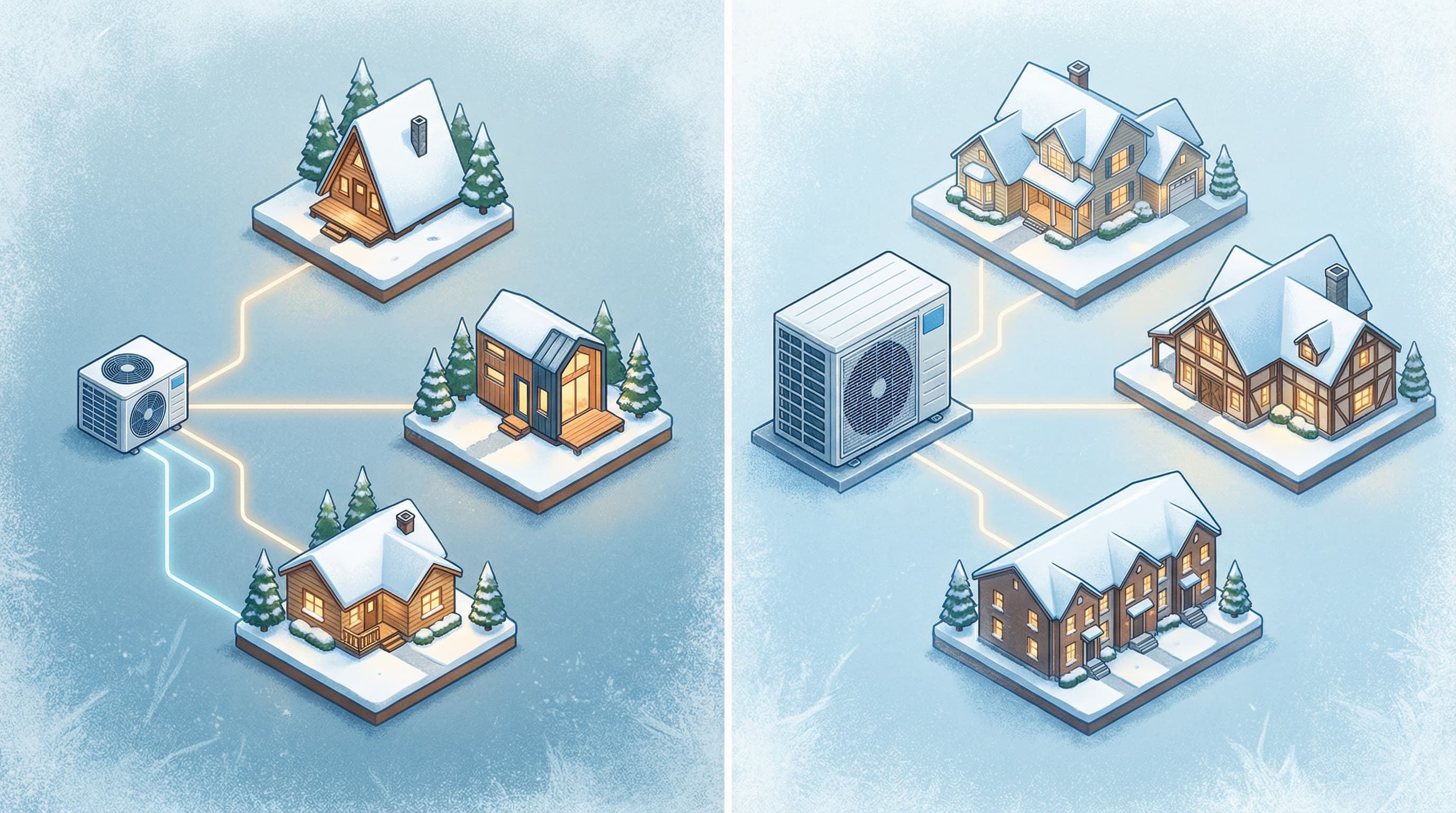
Tailoring heat pump systems to match home sizes can enhance efficiency and comfort in winter's chill. (Source: PointForm AI)
If you live in Canada, you’ve probably noticed that conversations about heat pumps have shifted from “What are they?” to “Can one really heat my home in January?” and, increasingly, “What size do I actually need?” The last question is the quiet one that makes or breaks your comfort, your energy bills, and the value of any rebates you’re trying to access.
A modern cold-climate air-source heat pump can absolutely handle Canadian winters when it’s the right model, installed properly, and—crucially—sized correctly for your home. Sizing isn’t about guesswork. It’s about matching the heat a house loses on a design winter day (and gains on a hot summer day) with the output of the equipment over a range of temperatures.
In practice, that means going beyond “three-ton unit for a typical house” and into questions like: How well is the attic insulated? How drafty are the windows? What’s the local winter design temperature? Has the home already had envelope upgrades? A proper sizing process turns those answers into a load calculation, then into a specific heat pump selection.
This guide walks through how sizing should be done for Canadian homes, what can go wrong when it isn’t, how to spot red flags in quotes, and how incentives and rebates indirectly push installers toward better sizing. By the end, you should feel confident asking pointed, practical questions that keep the process centred on your home—not your contractor’s rule-of-thumb.
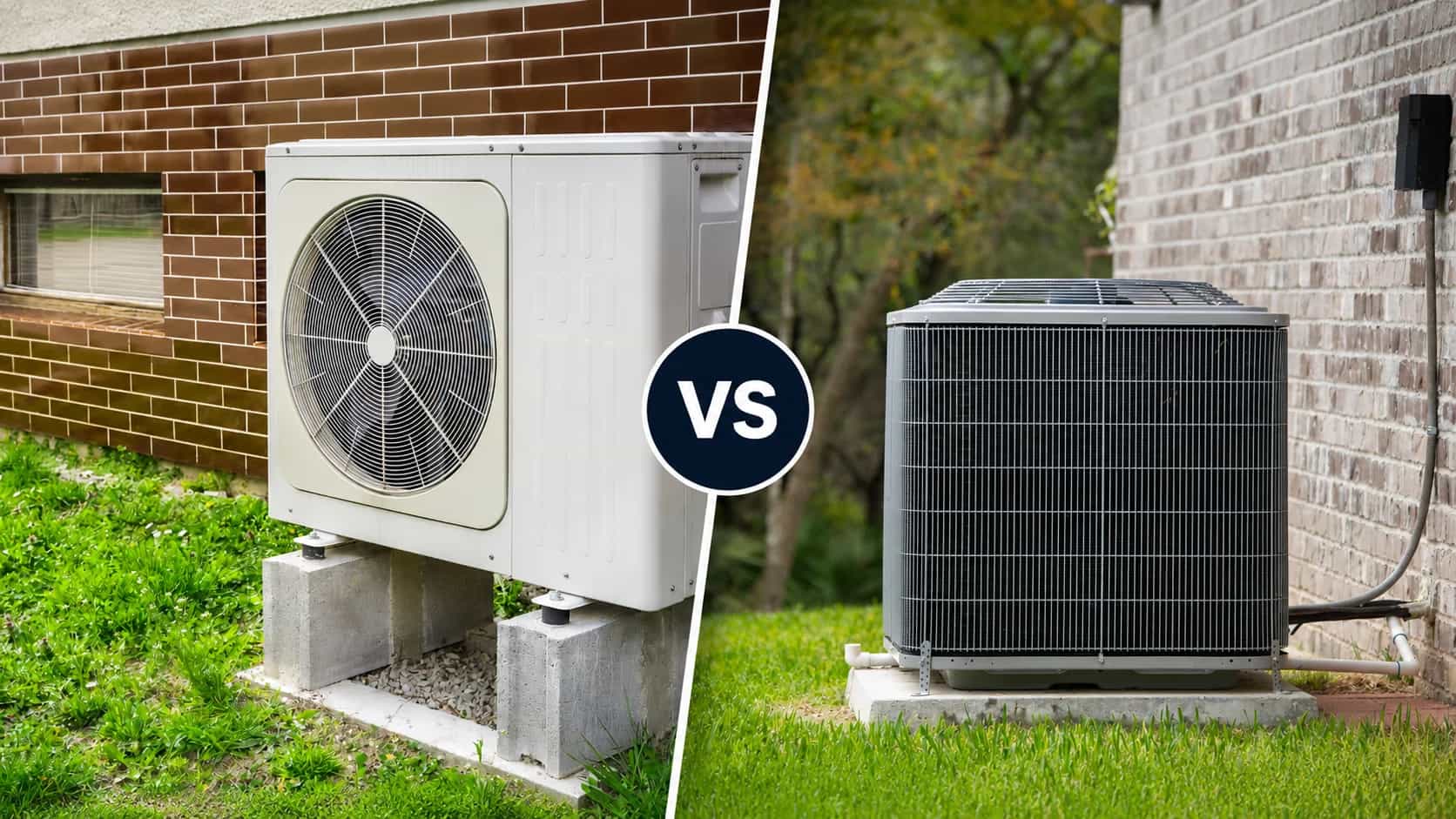
A heat pump doesn’t create heat; it moves it. According to the U.S. Department of Energy’s Heat Pump Systems guide, a heat pump uses electricity to transfer heat from a cooler place to a warmer place, which is why it can provide efficient heating and cooling in many climates.
Cold-climate air-source heat pumps push this idea further. They use advanced compressors, variable-speed inverters, and refrigerants designed to keep delivering useful heat even when the outdoor air is well below freezing. Instead of giving up at –5 °C the way older-generation units might, these systems can still produce meaningful heat output at temperatures typical of Canadian winters (often into the –20s), though exact temperature limits vary by model.
Two concepts matter for sizing:
On top of that, most air-source heat pumps used in Canada run periodic defrost cycles at sub‑zero temperatures. Frost builds up on the outdoor coil; the unit reverses temporarily to melt it, and indoor heat output dips for a few minutes. A properly sized system includes enough capacity margin that you barely notice these periods.
All of this is why Canadian homeowners should focus on cold-climate models and why “right sizing” has to be based on winter design conditions, not just average weather or nameplate ratings at mild temperatures.
When you compare heat pumps, look for low-temperature performance tables in addition to the usual efficiency ratings. The key question is: “How much heat does this unit still deliver at my local winter design temperature?”
At its core, sizing a heat pump is about matching load (what the house needs) with capacity (what the equipment can provide) across the seasons.
A proper calculation starts with design temperatures, which are statistical values—often the coldest 1% or 2.5% of winter hours, and the hottest 1% of summer hours. For example:
The colder that design point, the more heat the home loses and the more capacity the heat pump needs to maintain indoor comfort.
A professional load calculation (we’ll get to Manual J next) accounts for:
For Canadian homes, envelope quality and air leakage are often as important as square footage. Two homes with identical floor area—one a leaky 1960s bungalow with minimal insulation, the other a renovated or new high‑performance build—can have dramatically different heating loads.
Because of this, Natural Resources Canada encourages homeowners to have a professional assessment or energy audit before choosing a heat pump, specifically to identify insulation, window, and air‑sealing issues that change the required system size. That recommendation aligns directly with the load-calculation approach described in Manual J–style sizing, even if the audit report doesn’t use that language.
In North America, the reference point for residential load calculations is Manual J, an ANSI-recognised standard published by the Air Conditioning Contractors of America (ACCA). The Manual J Residential Load Calculation manual from ACCA describes a standardized method for determining heating and cooling requirements for single-family homes, townhomes, small multi-unit buildings, and manufactured homes.
ACCA notes that its technical manuals—including Manual J—are widely taught in industry training programs and are referenced in building codes as the basis for correctly sizing HVAC equipment through its ACCA Technical Manuals overview. In other words, Manual J isn’t just “one way” to do sizing; it is the way most professionals are expected to follow.
Manual J load calculations consider:
The goal is to produce room-by-room and whole-house heating and cooling loads, typically in BTU/h or kW, for those design conditions. Those numbers then feed into equipment selection (often using ACCA’s Manual S) and duct design (Manual D), both of which build on the accuracy of the original load calculation.
ACCA even publishes a companion resource called Understanding Manual J, aimed at helping contractors apply the standard correctly in practice, as explained in ACCA’s news release about the Understanding Manual J guidebook. That’s a useful signal: the procedure is detailed enough that professionals benefit from a structured guide to avoid shortcuts.
You don’t need to learn Manual J math, but you can look for its fingerprints:
If you only see someone pacing off square footage and glancing at your old furnace plate, you’re not getting a Manual J–quality sizing process.
A simple question like “Can you walk me through the heating and cooling loads you calculated for my home?” often reveals whether the contractor truly used a Manual J–style calculation or relied on a quick guess.

In the field, many systems are still sized using rules of thumb, such as:
These methods are simple and fast, which is why they persist. But ACCA’s standards and technical guidance repeatedly stress that equipment selection should be based on calculated loads, not on square footage alone, because envelope quality, air leakage, and glazing vary widely even within the same street and because modern efficiency upgrades change the numbers significantly. That expectation is embedded in the way ACCA’s technical manuals are positioned as the basis for design, installation, and maintenance in residential HVAC systems.
Rule-of-thumb numbers can be wildly off for:
You can use rough rules or calculators as a ballpark check, but you should not rely on them as the final word for a new, multi‑thousand‑dollar heat pump project.
An oversized heat pump may seem like a safe choice—“better too big than too small”—but in practice it creates several problems:
While that DOE statement focuses on air conditioners, the same physics apply to heat pumps operating in both cooling and heating modes. Oversizing can undermine the efficiency gains you’re paying for, especially in milder weather where a right-sized system would cruise along at low power.
An undersized heat pump has the opposite problem: it can’t keep up when outdoor temperatures approach your design winter conditions.
Common symptoms include:
The U.S. Department of Energy’s Heat Pump Systems guide explicitly notes that improperly sized systems—either too large or too small—can reduce comfort and increase operating costs compared with a properly sized, efficient unit. For Canadian homeowners relying on a heat pump as the primary heat source, undersizing often means the expected savings never materialize.
If your quote leans heavily on backup electric resistance heat for normal winter conditions—not just extreme cold snaps—that’s a red flag that the main heat pump may be undersized for your climate or your home’s envelope.
Unlike a furnace, a heat pump handles both heating and cooling. That can complicate sizing, especially in climate zones with hot, humid summers and cold winters.
A proper load calculation:
If you size purely for the coldest day, you can end up with:
If you size purely for the peak cooling load, you risk:
The sweet spot is often a cold-climate heat pump that:
In much of Canada, heating is the dominant consideration, but ignoring the cooling side entirely can lead to an oversized summer system that never runs in its efficient range.
A 2,000 ft² home in Victoria and a 2,000 ft² home in Winnipeg have very different heating requirements, even if they share the same floor plan. Add in construction era, insulation upgrades, and air sealing, and the variation grows again.
Here’s a high-level view of how context shifts the sizing conversation.
This is why you should be wary of any one-size-fits-all sizing rule you find online. A “standard” tonnage might be okay in one region and completely off in another, even before you factor in envelope upgrades.
If you’ve already done air sealing, window replacements, or insulation upgrades, make sure your contractor knows. Those improvements might justify a smaller heat pump than your neighbours’ homes of similar size.
A solid heat pump design process for a Canadian home typically includes:
Information gathering
Data collection
Load calculation
Equipment selection
Distribution design
Documentation
The more of these elements you see—and the more clearly they’re explained—the more confidence you can have that the heat pump is properly sized.
A Manual J report doesn’t have to be hundreds of pages, but it should show room-by-room loads and clearly list the outdoor design temperatures and insulation assumptions that went into the calculation.
Natural Resources Canada often emphasizes that improving the building envelope—adding insulation, upgrading windows, and reducing air leakage—reduces heating demand and can allow for a smaller, less expensive system when properly sized. That’s not just good building science; it’s directly tied to how Manual J calculates load.
If you’re planning a heat pump and also considering upgrades like:
…then those upgrades should happen before or alongside the final load calculation. Otherwise, you may end up with a heat pump sized for a leakier, higher‑load version of your house, which undermines the value of those improvements.
Imagine a 1970s two‑storey home in a cold Prairie city:
Even though the floor area hasn’t changed, the upgraded home could easily see a 25–40% reduction in design heating load compared with the original condition. A rule-of-thumb (BTU per square foot) would miss this; a Manual J–style process would capture it and likely recommend a smaller, less expensive heat pump that runs more efficiently.
Canada’s funding landscape for heat pumps is evolving quickly. On the corporate and large-building side, Natural Resources Canada provides technical guidance for the Clean Technology Investment Tax Credit (ITC), which offers a federal income tax credit for qualifying clean technologies, including certain air-source heat pump systems, as described in Natural Resources Canada’s Air-Source Heat Pump Systems technical guide under the Clean Technology ITC. While this guidance is aimed at corporations rather than individual homeowners, it underscores how seriously federal policy treats performance standards and correct application of heat pump technology.
On the homeowner side, the incentive story in 2025 and beyond is a mix of:
A recent review of the “gold rush” period for Canadian heat pump rebates—covering federal grants, loans, and provincial top‑ups—highlights that incentives are increasingly targeted, income‑tested, and linked to specific retrofit types, including cold-climate heat pumps and sometimes pre‑ and post‑retrofit energy evaluations, as summarized in Minisplits.ca’s overview of the 2025 Canadian heat pump rebate landscape.
Across provinces, you’ll find a patchwork of:
While each program has its own rules, a few themes matter for sizing:
The precise details change regularly, but the pattern of incentives tends to look like this:
Incentive rules change frequently. Always confirm current eligibility, deadlines, and equipment requirements on official program websites or with your energy advisor before committing to a specific model and size.
Use this checklist when you compare quotes for a new heat pump.
Ask these questions directly:
Green flag answers:
Red flag answers:
If two quotes are similar in price but only one includes a clear, documented load calculation, the documented one is usually the safer long‑term bet—even if it means asking a few more questions upfront.
You don’t necessarily need a printed Manual J report on your fridge, but you do want a Manual J–style calculation behind your design. That means the contractor uses recognized methods to calculate heating and cooling loads based on your climate, envelope, and windows—not just square footage. ACCA’s Manual J standard is widely recognized across North America for precisely this purpose, as highlighted in the ACCA Manual J technical manual, so it’s a good benchmark to ask about.
Signs of oversizing include short, frequent cycles, noticeable bursts of air, uneven temperatures between rooms, and poor humidity control in summer even when the thermostat is satisfied. These symptoms align with concerns about oversizing highlighted in the U.S. Department of Energy’s guidance on central air conditioners, which also apply to heat pumps because they use the same basic principles.
Generally, no. Going “one size up” can create short cycling, noise, and humidity problems, while adding cost. A better strategy is to size the heat pump properly for your design winter conditions and then pair it with a well‑planned backup strategy (such as staged electric heat or a hybrid furnace) that covers only the coldest hours. The U.S. Department of Energy’s Heat Pump Systems guide stresses that correct sizing is as important as efficiency ratings for comfort and operating costs.
Cold-climate models are designed to maintain useful heating capacity and efficiency at lower temperatures than standard units, often with inverter-driven compressors and enhanced refrigerant circuits. They’re tested for performance at lower outdoor temperatures and are frequently required or preferred in incentive programs. This emphasis on low-temperature performance is reflected both in Canadian policy guidance for qualifying systems under the Clean Technology ITC and in best-practice recommendations for cold regions discussed in the U.S. Department of Energy’s Heat Pump Systems overview.
In milder coastal areas, cooling and humidity control can indeed be as important as heating. However, design winter temperatures still matter—especially during cold snaps. Your contractor should calculate both heating and cooling loads and may choose a system that prioritizes summer comfort while still ensuring acceptable winter performance. The key is a balanced design that keeps the heat pump operating in its efficient modulation range most of the time.
Many Canadian homeowners choose hybrid systems where a cold-climate heat pump handles most of the heating and the gas furnace only runs at very low temperatures or during outages. The U.S. Department of Energy’s central air conditioning guidance recommends correct sizing and proper integration when pairing equipment; similar principles apply when your furnace becomes backup rather than the primary system.
Ductless systems avoid duct sizing issues, but they still require careful load calculations for each zone. It’s easy to oversize a wall cassette for a small room, leading to short cycles and uneven comfort. The underlying principles described in the U.S. Department of Energy’s Heat Pump Systems guide—matching capacity to load and using variable-speed equipment correctly—apply just as much to ductless systems.
Incentives don’t directly set the size of your system, but they often require that you install a cold-climate, high-efficiency model sized as a primary heat source. Some programs insist on a professional energy evaluation or load calculation as part of eligibility. Recent analysis of Canadian programs, including stacked federal and provincial offerings, shows that meeting these design and documentation requirements is critical to receiving funding, as outlined in Minisplits.ca’s assessment of 2025 heat pump rebates.
You don’t always need one, but it’s often a smart move—especially if you plan to access major rebates or make envelope upgrades. Energy audits provide measured or carefully estimated data on your home’s heat loss, which feeds into more accurate load calculations. Many Canadian programs either require or strongly encourage an EnerGuide evaluation, mirroring how professional standards like Manual J expect good input data to get good sizing outputs.
Ask to see a load report that shows design temperatures, room-by-room loads, and total heating and cooling loads. Confirm that the contractor used recognized procedures such as those documented in the ACCA Manual J technical standard, or software explicitly approved as Manual J–compliant. If you get vague answers or no documentation, it’s fair to push back.
Online tools are useful for sanity checks, but they rarely gather enough detailed information (wall assemblies, window specs, measured air leakage) to fully replace a professional Manual J–style calculation. Use them to see if proposed system sizes are in the right ballpark, but let a trained designer or energy advisor handle the final sizing for a major investment.
Yes. If you’re pairing a heat pump with existing hydronic systems (radiators, in-floor loops), water temperatures, flow rates, and emitter capacity become critical. While this guide focuses on air-source systems for forced-air distribution, the same principles apply: match the heat pump’s output to the building’s load and the distribution system’s capabilities, ideally using design tools consistent with the approach in ACCA’s technical manuals for residential systems, such as those summarized on ACCA’s technical manuals page.
They can be. The Clean Technology ITC is aimed at corporations, which can include property owners of multi-unit residential buildings. If you’re part of a condo board or own rental buildings, your accountant or energy advisor may look to programs like the Air-Source Heat Pump Systems technical guide published by Natural Resources Canada under the Clean Technology ITC for design and eligibility considerations, as referenced in Natural Resources Canada’s Clean Technology ITC guidance.
A well-sized variable-speed heat pump will often run for long periods at low to moderate capacity, rather than in short, full‑power bursts. That’s a good sign: it means the system is modulating to match the load, improving comfort and efficiency. This behaviour is consistent with the benefits of variable-speed operation described in the U.S. Department of Energy’s resources on heat pump technologies.
SEER and SEER2 measure seasonal cooling efficiency, which matters for summer operating costs but doesn’t directly determine size. In Canada, you should look at both heating-season performance (including low-temperature capacity and COP) and cooling efficiency when selecting and sizing a heat pump. The U.S. Department of Energy’s central air conditioning guidance uses SEER as a key metric for cooling systems, and the same concept carries over to the cooling mode of heat pumps.
Incentive rules that reward higher nameplate capacities or whole‑home coverage can, in some cases, create a subtle bias toward larger systems. However, most robust programs tie eligibility to proper design, efficiency levels, and cold-climate performance, not just size. Documents like the Clean Technology ITC technical guide and best-practice resources from organizations such as ACCA and the U.S. Department of Energy emphasize that correct sizing and application are essential to achieving the promised savings rather than simply installing bigger equipment.
Minisplits.ca. (2025, September 10). The 2025 Canadian Heat Pump Rebate Gold Rush is Ending. Here’s How to Claim Your Share. Retrieved from https://minisplits.ca/2025-canadian-heat-pump-rebate-ending/
Natural Resources Canada. (2025). Air-Source Heat Pump Systems – Clean Technology Investment Tax Credit (CT ITC) Technical Guide. Retrieved from https://natural-resources.canada.ca/taxes/income-tax/corporations/federal-tax-credits/clean-economy-itc/clean-technology-itc/air-source-heat-pump-systems
Air Conditioning Contractors of America (ACCA). (n.d.). Technical Manuals – Standards & Codes. Retrieved from https://www.acca.org/acca/standards/technical-manuals
Air Conditioning Contractors of America (ACCA). (2016, May 24). ACCA Publishes Understanding Manual J Guidebook. Retrieved from https://www.acca.org/news/release/acca-publishes-understanding-manual-j-guidebook
Air Conditioning Contractors of America (ACCA). (2016). Manual J® Residential Load Calculation (8th Edition – ANSI/ACCA 2 Manual J – 2016). Retrieved from https://www.acca.org/technical-manual/manual-j
U.S. Department of Energy. (2025). Central Air Conditioning – Energy Saver. Retrieved from https://www.energy.gov/energysaver/central-air-conditioning
U.S. Department of Energy. (2025). Heat Pump Systems – Energy Saver. Retrieved from https://www.energy.gov/energysaver/heat-pump-systems