How To Decide, What It Costs, And How To Make The Switch With Confidence

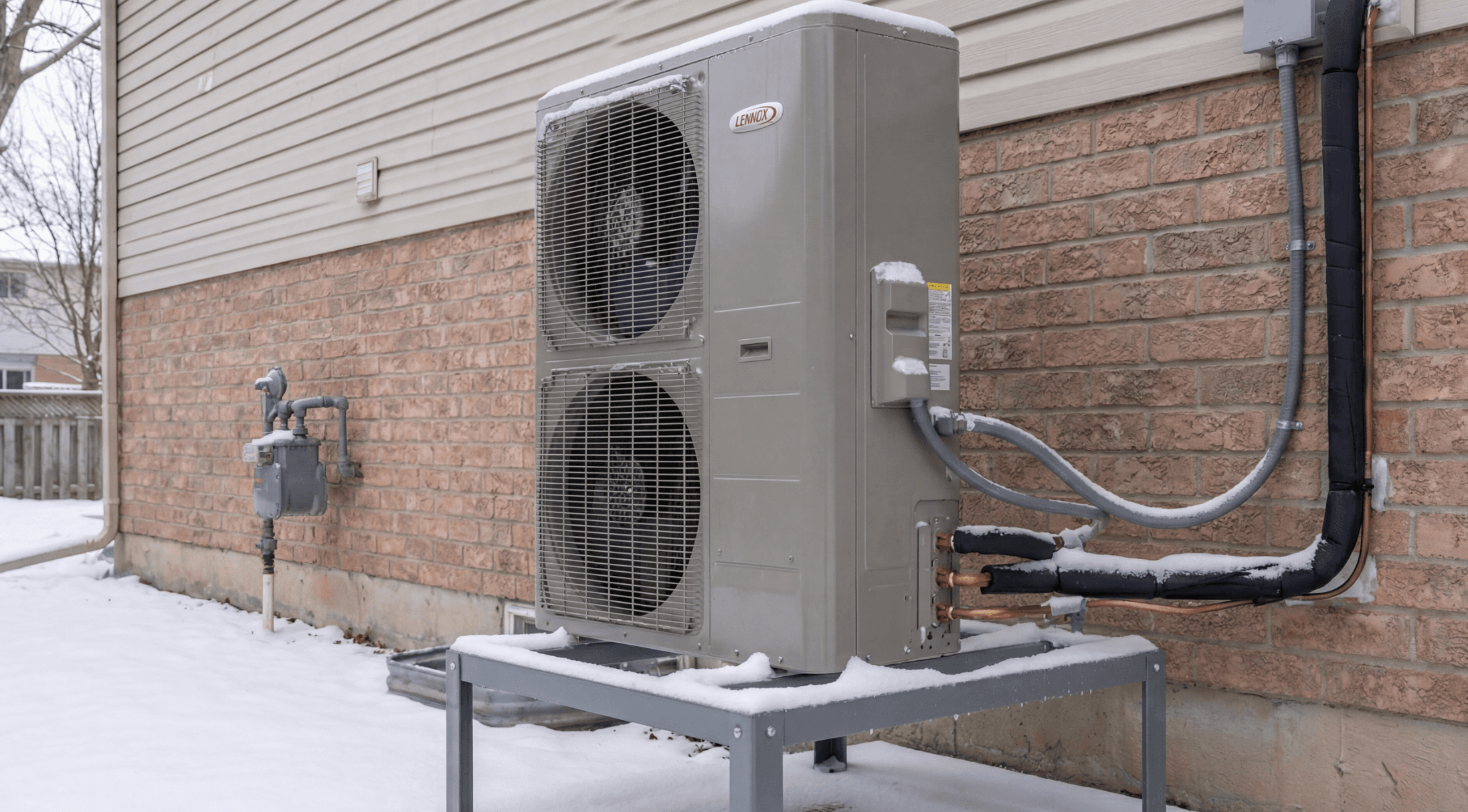
Winter-ready, this Lennox heat pump exemplifies efficient heating solutions for Canadian homes facing harsh cold weather. (Source: PointForm AI)
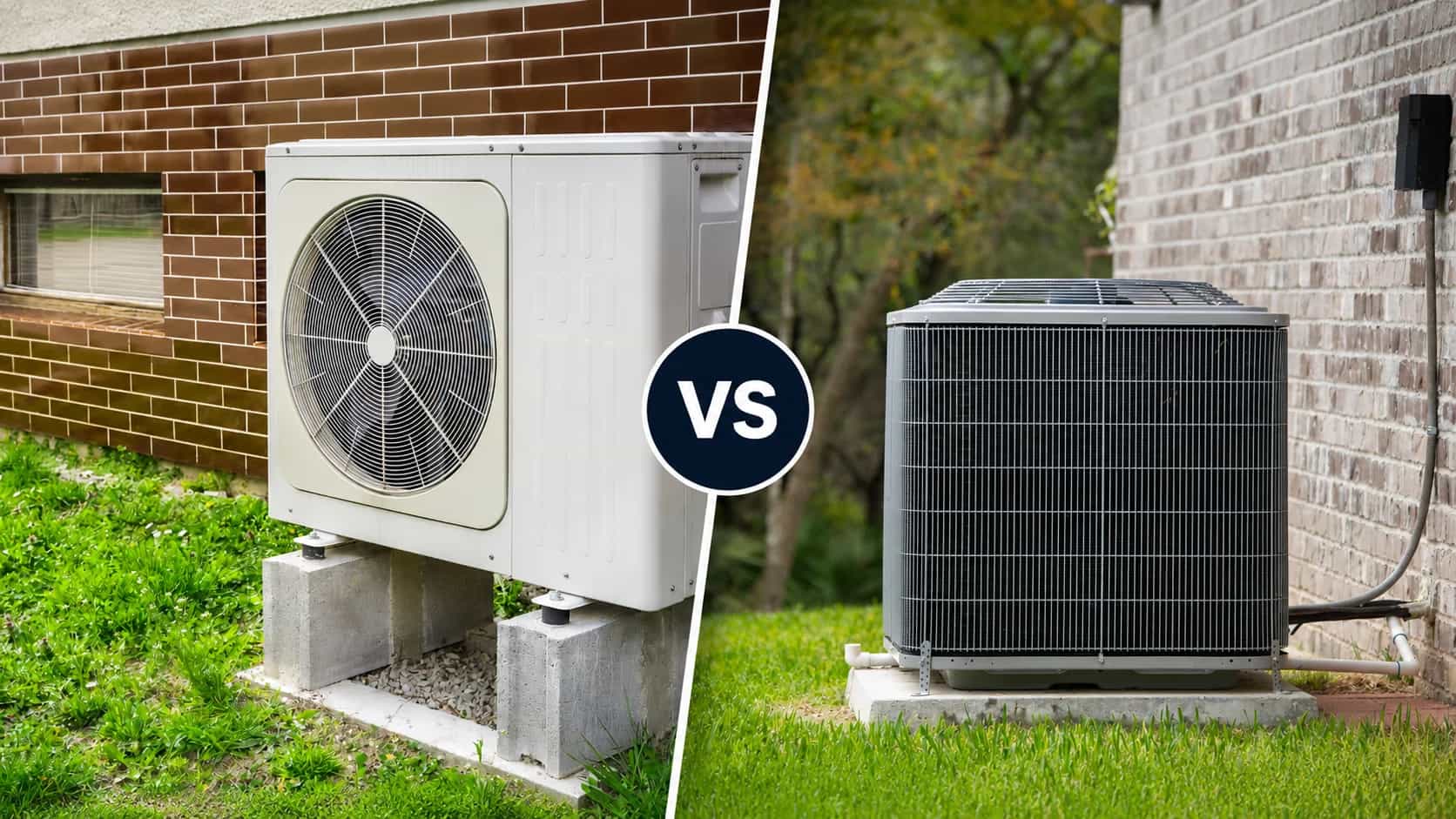
If your central air conditioner is nearing the end of its life, you’re standing at a crossroads: replace it with another A/C, or upgrade to a heat pump. For Canadian homeowners, this isn’t just a technical question—it’s a comfort, cost, and long‑term planning decision that will shape how your home feels in both July heatwaves and January cold snaps.
A heat pump is an electrically driven system that both cools your home in summer and provides heating in winter by moving heat between indoors and outdoors, instead of creating heat by burning fuel or glowing electric elements. In other words, it can often take the place of a separate air conditioner and a large part of your heating system in a single piece of equipment. That “two‑in‑one” role is exactly why many Canadians are now using an A/C replacement moment to rethink their entire comfort system.
Across Canada, federal support has already helped install roughly a quarter of a million new residential heat pumps since 2020 through programmes such as the Canada Greener Homes Initiative, as reported by Natural Resources Canada. That’s a strong signal that this technology is moving from niche to mainstream.
At the same time, incentives are changing, some federal intakes have closed to new applicants, and provincial programmes continue to evolve. Homeowners are left with a very reasonable set of questions: Will a heat pump actually work where I live? How much more will it cost up front? How much might I save? And what exactly is the process to switch from an air conditioner to a heat pump in Canada?
This guide walks through those questions step by step—how heat pumps work, how they compare with A/Cs, how they perform in different Canadian climates, what they cost, what rebates exist, and how to decide whether switching now is the right move for your home.
Both heat pumps and traditional central air conditioners use the same basic refrigeration cycle: a compressor moves a refrigerant through coils indoors and outdoors to move heat from one place to another. The key difference is that a heat pump has a reversing valve that allows the system to run in both directions. In cooling mode, it behaves like a regular A/C and moves heat from inside your home to the outdoors. In heating mode, it pulls low‑temperature heat from outside air and moves it indoors.
Because they move heat rather than create it, modern air‑source heat pumps commonly deliver two to three units of heat energy for every unit of electricity they consume—an effective efficiency of 200–300% compared with near‑100% for electric baseboard or furnace elements. That multiplier is what makes them so compelling for homes that currently rely on costly electric resistance heating.
At a practical level, you can think of a central ducted heat pump as a drop‑in replacement for your outdoor A/C unit that can also heat, using the same indoor air handler and ductwork. Many systems are paired with an existing furnace in a “dual‑fuel” configuration: the heat pump handles most of the heating year, and the furnace only turns on when it’s extremely cold or when electricity prices are high relative to gas.
If your existing furnace is relatively new but your A/C is failing, a “hybrid” or dual‑fuel setup can be a smart bridge option—your new heat pump handles most heating and cooling, while the furnace only backs it up in severe cold.
Historically, heat pumps had a deserved reputation for struggling in deep cold. Older models lost capacity and efficiency quickly when temperatures dipped below freezing, leading to drafty homes and heavy reliance on backup heat. That picture is changing rapidly with cold‑climate air‑source heat pumps designed specifically for northern conditions.
Cold‑climate models supported under federal programmes are selected to maintain useful output in temperatures down to roughly –30 °C, with eligibility criteria typically requiring a coefficient of performance (COP) of at least 1.8 at –15 °C according to cold‑region guidance from Natural Resources Canada. That COP means the unit is still delivering about 1.8 units of heat energy for every unit of electricity consumed even at –15 °C.
One of the most counter‑intuitive facts about winter is that very cold air still contains a lot of heat. The federal Oil to Heat Pump Affordability announcement explains that even at –18 °C, outdoor air retains about 85% of the thermal energy it has at 21 °C, which is why well‑designed systems can continue extracting heat in sub‑zero conditions as highlighted by Natural Resources Canada. The challenge is not the absence of heat but the engineering needed to collect it efficiently.
In milder Canadian climates, this is even more favourable. Installers in Metro Vancouver report that heat pumps can reach over 300% efficiency—producing more than three units of heat per unit of electricity used—because temperatures are rarely extremely cold in that coastal environment according to EcoPro Heating. In colder Prairie or interior regions, the same equipment will still provide heat, but may spend more time at lower efficiency and require more backup.
Use the table below as a “gut check” for what a heat pump can realistically do in different parts of the country. Local microclimates, electricity prices, insulation levels, and equipment choices still matter, but this gives you a framework.
In cold regions, the question isn’t “Will a heat pump work at –30 °C?” but “How will it work with my backup system at –30 °C?” The best outcomes come from designing the heat pump and backup (furnace, boiler, or electric elements) as a coordinated system, not separate gadgets.
When you’re staring at a repair quote for a dying A/C, the most immediate question is cost. In Canadian markets, installed prices from reputable contractors typically show central air conditioners ranging from roughly $3,500–$7,000, while similar‑capacity heat pumps may range from about $4,000–$10,000 before rebates, depending on the home and configuration according to examples from EcoPro Heating. The ranges are wide because ductwork, electrical upgrades, brand tiers, and cold‑climate features all move the number.
On operating costs, the picture can flip in favour of heat pumps because each kilowatt‑hour of electricity can deliver two to three times as much usable heat as an electric baseboard or furnace element. In gas‑heated homes, savings depend on the local relationship between electricity and gas prices, but using a heat pump to cover mild‑to‑moderate winter days while keeping the gas furnace only for deep cold can significantly cut gas consumption.
An analysis highlighted by NerdWallet Canada, based on work by the Ontario Clean Air Alliance, modelled a detached home in Ontario switching from central air conditioning to an air‑source heat pump and estimated around $2,676 per year in electricity cost savings in one financing scenario, even after accounting for loan payments on the new system according to NerdWallet Canada. The same coverage notes that the lifetime cost of a standard heat pump with electric backup can be about 13% lower than the combined cost of a gas furnace plus A/C in some Canadian studies, reinforcing that the total picture is more than just the sticker price.
These are not guarantees; they are scenario‑specific examples. But they illustrate the central pattern: pay more up front, potentially save each month, and often come out ahead over the lifetime of the equipment—especially when incentives are layered on top.
Here’s a simplified way to think about the options when your A/C is failing:
A right‑sized, well‑installed mid‑range heat pump in a good Canadian application can be a better investment than an over‑sized “top tier” A/C that still leaves you paying high winter heating bills.
In Canada, you almost never compare “A/C vs heat pump” on price alone. Incentives can shift the balance dramatically—especially for households currently using expensive oil or electric resistance heating.
The Canada Greener Homes Initiative has been the anchor federal programme for several years, offering grants ranging from about $125 up to $5,000 for eligible retrofits such as air‑source and ground‑source heat pumps, plus up to $600 to help cover the cost of pre‑ and post‑retrofit EnerGuide evaluations according to programme details from Natural Resources Canada. While the main grant intake has closed to new applicants, many existing participants are still moving through the process and receiving funding.
Updated documentation for the Greener Homes Initiative also emphasises minimum efficiency levels for eligible air‑source heat pumps—for example, specifying HSPF2 Region V of at least 6.6 and SEER2 of at least 15.2 for qualifying systems—so the programme is effectively steering households toward higher‑performance equipment as described in the technical tables from Natural Resources Canada. Those metrics provide a useful benchmark even if you are not personally using that grant.
Alongside Greener Homes, the Oil to Heat Pump Affordability (OHPA) programme is targeted at lower‑ to median‑income households that still rely on oil heating. The federal government notes that eligible homeowners can receive up to $5,000 in federal funding to switch from oil to a cold‑climate heat pump, on top of other potential support, as outlined in the OHPA announcement from Natural Resources Canada. Oil‑heated homes often see some of the strongest financial cases for switching because they combine high fuel costs with strong incentives.
In Ontario, the federal OHPA programme is delivered jointly with the Independent Electricity System Operator (IESO), allowing eligible oil‑heated homeowners to access up to $25,000 in combined support when federal and provincial funds are stacked, including up to $15,000 from the federal side and up to $10,000 from the IESO as described by Natural Resources Canada. For households that qualify, that level of support can reduce or even eliminate the net cost difference between a simple A/C replacement and a high‑efficiency heat pump.
With new federal grant intake paused, provincial and utility programmes are playing a larger role. Overviews of 2025 incentives highlight that:
Exact amounts and eligibility change regularly, but the pattern is consistent: many provinces and utilities still provide meaningful heat pump rebates, especially when you are switching away from fossil fuels or electric resistance heat.
Most major Canadian heat pump rebate programmes require you to complete both pre‑ and post‑retrofit EnerGuide home energy evaluations carried out by an energy advisor registered with Natural Resources Canada, with federal guidance indicating that up to $600 of that assessment cost can be reimbursed under Greener Homes according to Natural Resources Canada. National rebate overviews also note that these audits typically cost in the range of a few hundred dollars, which is often recovered once your grant is issued as explained in rebate guides from Solenery.
This requirement means that switching to a heat pump with incentives is a small project, not a same‑day equipment swap: you book an audit, receive a report, complete work, and then confirm upgrades to unlock grants.
Incentive details change frequently. Before making a final decision, check the latest programme pages or speak with a registered energy advisor or qualified contractor to confirm what’s available in your area and how it applies to your home.

Not every home is an ideal candidate for switching from a simple A/C replacement to a heat pump right now. The decision depends on five main factors:
You are often a strong candidate for upgrading to a heat pump when:
You might decide to delay the switch (or limit your upgrade) when:
When in doubt, ask an HVAC contractor to model two options: “replace A/C only” and “install a cold‑climate heat pump with my existing furnace as backup.” The comparison of upfront cost, annual energy use, and incentives is often the clearest way to see your choice.
Switching from an air conditioner to a heat pump is best approached as a small project with clear stages rather than a rushed emergency purchase.
Decide what matters most:
Write down your priorities; they will guide trade‑offs later.
Gather basic information:
This “snapshot” will help both your energy advisor and HVAC contractors.
If you plan to access major grants, you will typically need a pre‑retrofit EnerGuide evaluation by a Natural Resources Canada–registered energy advisor, with federal information indicating that up to $600 of this cost can be reimbursed as part of Greener Homes according to Natural Resources Canada. National rebate guides emphasise that this step is mandatory for most bigger programmes and should be done before any work begins as summarised by Solenery.
The advisor will provide:
Look for contractors who:
Ask whether they have installed systems that qualify under Greener Homes or OHPA requirements, such as the HSPF2 and SEER2 thresholds indicated by Natural Resources Canada.
When requesting quotes, send contractors the same information (home size, current equipment, goals, recent bills) and ask them to price both a standard A/C replacement and a heat pump option so you can compare like for like.
With quotes in hand, dig into the details:
This is where a high‑quality contractor earns their fee—small design choices can have large comfort and cost impacts.
Before signing a contract, confirm:
Make sure your contractor understands which programmes you are targeting so that they can select qualifying equipment and provide required documentation.
During installation, insist on:
Ask your contractor to walk you through the thermostat or control app, especially how and when the backup heat source will engage.
After the system is running:
Well‑maintained, quality systems can often deliver 15–20 years of service, with the possibility of future refrigerant upgrades or component swaps rather than full replacements.
To pull things together, here is a concise look at the advantages and trade‑offs of choosing a heat pump instead of simply replacing your air conditioner.
For many Canadian homes with aging A/C units, the “default” is to replace like‑for‑like. A more strategic move is to treat this as a once‑in‑15‑years opportunity to improve both heating and cooling, lock in incentives, and set your home up for the next couple of decades.
Cold‑climate air‑source heat pumps supported under Canadian programmes are designed to keep delivering useful heat at outdoor temperatures down to around –30 °C, though their efficiency and capacity decline as it gets colder and they rely more on backup heat; federal criteria that include a minimum COP of 1.8 at –15 °C give a good sense of what these systems are expected to do according to guidance from Natural Resources Canada.
In milder climates like coastal BC, many homes rely on a heat pump as the primary system with only minimal electric backup, whereas in colder regions such as the Prairies, the most robust approach is often a hybrid system where the heat pump handles most heating and cooling and your existing gas, oil, or propane furnace only runs in extreme cold, a strategy often reflected in dual‑fuel upgrade examples from EcoPro Heating.
Yes, a central heat pump typically costs more up front than a comparable central A/C, with Canadian installer examples placing A/Cs in the roughly $3,500–$7,000 installed range and similar‑capacity heat pumps closer to $4,000–$10,000 before rebates according to EcoPro Heating.
Even where electricity is relatively costly, a modern heat pump can deliver two to three times more heat per unit of electricity than electric resistance systems, which means your home can get the same comfort using fewer kilowatt‑hours, and when combined with financing and layered incentives, some Ontario modelling shows that total annual costs can even drop compared with running a traditional A/C according to case studies cited by NerdWallet Canada.
Most modern heat pump outdoor units are designed to be comparable in noise to high‑efficiency A/C condensers, but variable‑speed compressors and fan controls can make them quieter at low and moderate loads, so placement, mounting, and selecting a quality model are more important than the basic technology type.
Timelines vary by programme and province, but the general pattern is that you complete a pre‑retrofit EnerGuide audit, perform the work, complete a post‑retrofit audit, and then submit documents for reimbursement; federal guidance emphasises that the EnerGuide evaluation cost may be partially reimbursed (up to about $600) as part of the process according to Natural Resources Canada.
The main intake for the Canada Greener Homes Grant has closed to new applicants, but many existing participants are still receiving funding and there are other federal supports such as OHPA for qualifying oil‑heated households, with programme structures and progress described in updates from Natural Resources Canada.
OHPA is a federal programme aimed at low‑ to median‑income households that currently heat with oil, offering up to $5,000 in federal funding for a cold‑climate heat pump and, in some provinces such as Ontario, additional stacked support through partners like IESO that can bring total assistance up to about $25,000 according to programme descriptions from Natural Resources Canada.
While details change frequently, recent national overviews highlight especially strong offers in British Columbia through CleanBC, Nova Scotia via Efficiency Nova Scotia, and Prince Edward Island, among others, with rebates in these provinces reaching roughly $5,000–$6,500 for some projects according to compiled summaries from Solenery.
Most of the larger grants and incentives, particularly federal and stacked provincial programmes, require pre‑ and post‑retrofit EnerGuide evaluations by an NRCan‑registered advisor, a requirement repeatedly emphasised in federal guidance and third‑party rebate guides such as those provided by Solenery.
Yes, ductless mini‑split heat pumps are often an excellent solution in homes without ducts, allowing you to add efficient heating and cooling to specific rooms or zones, and they are commonly featured in provincial rebate programmes described in national incentive round‑ups by Canadian Real Estate Magazine.
Look for models that meet or exceed the HSPF2 and SEER2 minimums specified by programmes like the Canada Greener Homes Initiative and ensure your contractor provides documentation showing those ratings, which are detailed in the official eligibility tables published by Natural Resources Canada.
In practice, when you install a central heat pump, it usually replaces the outdoor A/C unit entirely and takes over cooling, while your existing furnace provides heating backup; keeping a separate A/C generally isn’t necessary and may complicate controls and maintenance.
Lifespans are similar: with proper installation and maintenance, many central heat pumps and A/C units provide 15–20 years of service, with some components replaced along the way; the main difference is that a heat pump is working year‑round, so choosing quality equipment and maintaining it properly is especially important.
Some homes—particularly older ones with 60‑amp or heavily loaded 100‑amp panels—may require an upgrade when adding a larger central heat pump or multiple ductless units, so it’s important to have both your electrician and HVAC contractor evaluate panel capacity early in the planning process, especially if you also plan other electric upgrades like EV charging.
In snowy regions, it’s critical to mount the outdoor unit on a sturdy stand high enough to stay above typical snow levels, with good drainage and airflow around it, so that defrost cycles can operate properly and snow or ice doesn’t pack into the coil; your contractor should also plan for clear access for servicing.
For many homeowners, the answer is still “yes” because provincial and utility programmes continue to offer substantial support and federal options such as OHPA remain in place, and federal progress updates showing roughly 250,000 heat pump installations to date suggest that these systems are a durable, long‑term policy priority according to Natural Resources Canada.
Natural Resources Canada. (n.d.). Canada Greener Homes Initiative – Eligible Retrofits and Grant Amounts. Retrieved from https://natural-resources.canada.ca/energy-efficiency/home-energy-efficiency/canada-greener-homes-initiative/eligible-retrofits-grant-amounts
Natural Resources Canada. (n.d.). Grants for Canadian Homeowners Living in Off‑Grid Communities. Retrieved from https://natural-resources.canada.ca/energy-efficiency/home-energy-efficiency/canada-greener-homes-initiative/grants-canadian-homeowners-living-north-grid-communities
Natural Resources Canada. (n.d.). Canada Greener Homes Initiative – Applicants in Participating Provinces and Territories. Retrieved from https://prod-natural-resources.azure.cloud.nrcan-rncan.gc.ca/energy-efficiency/home-energy-efficiency/canada-greener-homes-initiative/applicants-participating-provinces-territories
Natural Resources Canada. (n.d.). Canada Greener Homes Initiative – Eligible Retrofits and Grant Amounts (Azure). Retrieved from https://prod-natural-resources.azure.cloud.nrcan-rncan.gc.ca/energy-efficiency/home-energy-efficiency/canada-greener-homes-initiative/eligible-retrofits-grant-amounts
Natural Resources Canada. (2025). Canada Greener Homes Initiative – Progress Update, April 2025. Retrieved from https://prod-natural-resources.azure.cloud.nrcan-rncan.gc.ca/energy-efficiency/home-energy-efficiency/canada-greener-homes-initiative/greener-homes-initiative-progress-update-april-2025
Solenery. (2025). Clean Energy Rebates in Canada. Retrieved from https://solenery.com/post/clean-energy-rebates-canada/
Natural Resources Canada. (2023). Oil to Heat Pump Affordability Grant – News Release. Retrieved from https://www.canada.ca/en/natural-resources-canada/news/2023/02/oil-to-heat-pump-affordability-grant1.html
Canadian Real Estate Magazine. (2025). 2025 Green Home Grants & Energy Retrofit Incentives. Retrieved from https://www.canadianrealestatemagazine.ca/news/2025-green-home-grants-energy-retrofit-incentives/
EcoPro Heating. (n.d.). Heat Pump or Air Conditioner – What BC Homeowners Should Choose. Retrieved from https://www.ecoproheating.ca/blog/heat-pump-or-air-conditioner-what-bc-homeowners-should-choose
NerdWallet Canada. (n.d.). Heat Pump: How It Works, Savings, Rebates. Retrieved from https://www.nerdwallet.com/ca/mortgages/heat-pump-how-it-works-savings-rebates
Solenery. (2025). Top 5 Government Rebates for Solar and Heat Pumps in Canada 2025. Retrieved from https://www.solenery.com/post/top-5-government-rebates-for-solar-and-heat-pumps-in-canada-2025/