The shared baseline
Three things apply to every household, everywhere, regardless of housing type. Monitor the right feed as a daily habit during the season. Keep a written household plan. Hold enough supplies to be self-sufficient for at least 72 hours. That last benchmark is the standard cross-hazard recommendation from Public Safety Canada, and it covers water, non-perishable food, medications, copies of key documents, and basic first aid. A plan is more than a kit: it means knowing multiple exit routes, how each person receives alerts, where you will reunite if separated, and who handles pets.
The gap between knowing this and doing it is wide. BC Hydro's 2026 preparedness messaging found that many residents still lack a basic emergency plan and 72-hour kit, even though wildfires can cause extended power outages and evacuations. Building these once, off-season, is what makes the rest of a smoky summer feel routine.
Match the effort to your home
The following turns the shared baseline into a housing-specific worklist. Read your row, not all three.
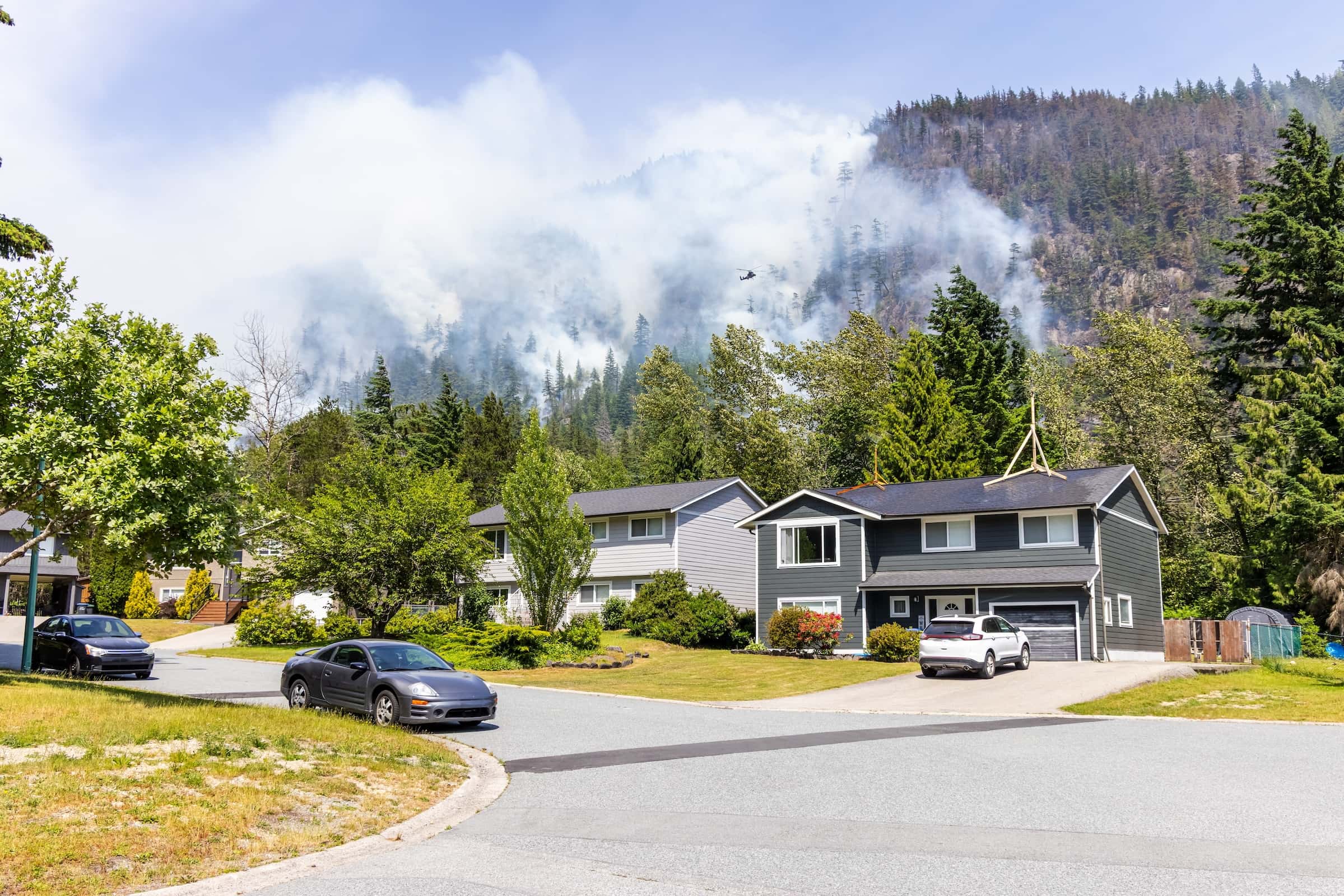
For property-level work in the suburban and rural rows, the highest-value first steps are the simple ones that FireSmart emphasizes: clear dead leaves and needles from gutters and the roof, keep the first 1.5 metres around the house free of anything that burns easily, and move firewood and other fuel well away from the structure. None of it requires a contractor, and together it meaningfully lowers the odds that a drifting ember finds a foothold.
If you want a room-by-room, task-by-task version, our complete home and property wildfire checklist walks through the full sequence.
Some household members need protection sooner than others. People with heart or lung conditions, older adults, pregnant people, young children, and anyone who works outdoors are more sensitive to wildfire smoke and should move to cleaner air and stricter precautions earlier in a smoke event than a healthy adult would.