How Accurate Are Consumer Radon Monitors in Canada: What to Trust and How to Verify Readings
A Practical Framework For Interpreting Readings, Avoiding False Confidence, And Confirming What Matters In Your Home
By
Published: March 15, 2026
Credit: Homeowner.ca
Key Takeaways
•The number that matters for decisions is your long-term average over months, not the app’s daily swings.
•“Accuracy” is a system: device validation + placement + environment + averaging time all have to work together.
•If your readings are near the guideline or unexpectedly high, verify with a long-term test and—when needed—a certified professional measurement.
Consumer radon monitors are appealing for the same reason fitness watches are: you get continuous data, trends, and fast feedback. But “fast feedback” and “reliable decision-making” aren’t the same thing—especially with radon, where indoor concentrations can move around dramatically within a day, across weather shifts, and between seasons.
So when homeowners ask, “How accurate is my radon monitor?” they’re usually asking two different questions at once. First: Is the sensor trustworthy? Second (and more important): Is the way I’m using it producing a number I can actually act on?
Canada has a clear benchmark for action, and a clear testing philosophy behind that benchmark. The Health Canada radon guideline anchors decision-making to a long-term average because it’s meant to reflect your typical, year-round exposure in a normal lived-in space, not a worst-hour or best-day snapshot.
This article stays tight to one goal: helping you understand what “accuracy” means for consumer radon monitors in Canada, what can make them look wrong (even when they’re working), and how to verify readings so you can trust the conclusion—not just the number.
Advertisement — Article Continues Below
Start With The Canadian Benchmark, Not The App Graph
The 200 Bq/m³ Reference Level Is The Target Your Long-Term Average Must Be Compared Against
Accuracy gets fuzzy the moment you don’t know what you’re trying to estimate.
In Canada, the benchmark is the national radon guideline of 200 becquerels per cubic metre (Bq/m³), and the practical intent is straightforward: compare your home’s long-term average radon concentration in a normal occupancy area against that level, using guidance from Health Canada’s radon guideline page as the reference point for interpretation and next steps.
That framing matters because consumer monitors often show multiple numbers at once—hourly, daily, weekly, lifetime averages, trend charts—and it’s easy to let the most dramatic number drive your emotions. A single spike can be real, but it’s rarely the right “decision number.”
Instead of asking “Is today high?”, the better accuracy question is: “Is my long-term average, measured in the right place, likely to represent my home’s typical annual level?” That one question pulls you toward the testing duration, placement, and verification steps that actually improve reliability.
Note
A radon monitor can be “accurate” in a technical sense and still be unhelpful if it’s measuring in the wrong room, at the wrong height, or for too short a period.
Advertisement — Article Continues Below
Translate Readings Into Timelines
A Useful Interpretation Turns Radon Numbers Into “How Soon Do I Confirm And Act?”
Raw readings are hard to prioritize without a time-to-action lens. Health Canada’s guidance includes a practical urgency framework: long-term results in a moderate range call for action on a longer timeline, while higher long-term results shorten the window, and you can see that structure reflected in the Health Canada guide for radon measurements in public buildings where higher measured levels drive faster completion expectations.
Here’s the homeowner-friendly way to use that idea without overreacting to short-term swings:
If your monitor’s long-term average is hovering just above the guideline, your job is usually confirmation (better placement, longer averaging, or a long-term kit) before you treat it as a settled conclusion.
If your monitor’s long-term average is significantly above the guideline and staying there, the priority becomes verification plus planning—not because you need to panic, but because the probability of a true elevated annual average rises as the long-term number stays high.
This is where “accuracy” becomes practical: you’re not trying to win a lab contest, you’re trying to decide what to trust enough to plan your next step.
Averaging Time Is The Biggest Accuracy Lever You Control At Home
When manufacturers talk about accuracy, they often mean sensor performance under controlled conditions. Homeowners need a wider definition:
Accuracy (for you) = a long-term average that represents the annual reality in your normal lived-in space.
Health Canada draws a bright line around what “long-term” means, and the Guide for Radon Measurements in Residential Dwellings defines long-term testing as at least 91 days and recommends 3 to 12 months (often ideally during the heating season) to estimate the annual average reliably.
This is the single most common mismatch between consumer expectations and radon reality:
People expect the first few days of data to be “the answer.”
Radon behaves like a variable environmental signal that needs time to smooth out.
A continuous monitor can still be a great tool—but only if you treat it like a long-term measurement device, not a short-term alarm.
A Simple “Which Number Should I Trust?” Table
Monitor Readout
What It Usually Represents
What It’s Good For
What It’s Not Good For
1-hour / 24-hour values
Short-term conditions
Spotting patterns (e.g., ventilation changes)
Deciding whether you exceed the guideline
7-day average
Early trend smoothing
Getting a rough sense of direction
Treating as a substitute for long-term testing
30-day average
More stable trend
Comparing placement changes over time
Declaring your annual average is “done”
3-month average
Long-term measurement window
Decision-quality estimate for many homes
Ignoring seasonal context if you only measure in summer
6–12 month average
Strong annual estimate
Highest confidence at-home trend
Overcomplicating if you already have clear results
Advertisement — Article Continues Below
Choose Monitors That Have Been Performance Tested In Canada
C‑NRPP Testing Is The Closest Thing To A “Trust Label” For Consumer ERMs
“Consumer radon monitor” is a category, not a guarantee.
Health Canada explicitly advises that if you buy an electronic radon monitor, you should choose one that has passed performance testing through the Canadian National Radon Proficiency Program, and that guidance is laid out in Health Canada’s testing your home resource to help consumers separate validated tools from generic sensors with unclear testing.
Once you know that, your shopping and trust checklist gets more concrete:
Look for language that clearly indicates the device was tested for long-term residential radon measurement in the Canadian context.
Treat vague “high accuracy” marketing as a starting point, not proof.
If you want an extra verification step that doesn’t rely on marketing at all, the Canadian National Radon Proficiency Program maintains device resources, including a list of professional-use devices on its site, and you can use the Canadian National Radon Proficiency Program device list page as a reference point for what “evaluated equipment” looks like in practice.
Tip
If a monitor can’t clearly explain what standard it was tested against (and for what averaging period), treat the first months of readings as informational, then confirm with a long-term test before you make big decisions.
A Perfect Sensor In A Bad Location Still Produces A Bad Decision Number
Homeowners often blame the device when the real problem is placement.
Health Canada’s step-by-step placement instructions for electronic radon monitors are practical and specific, and the Using an Electronic Radon Monitor as a Long-Term Detector guide emphasizes three ideas that quietly drive accuracy: measure on the lowest lived-in level, place the device at roughly breathing height (about 0.5 to 2 metres above the floor), and leave it in place continuously for months to get a long-term average you can trust.
Here’s how to translate that into a homeowner reality check:
If your monitor is in a storage furnace room that nobody spends time in, the number might be real—but it may not represent your household’s meaningful exposure.
If your monitor is on the floor “because it’s a basement test,” you’re increasing the odds of a biased reading from local conditions (drafts, cold spots, humidity, contact with surfaces).
If you keep moving the device around, you’re continuously resetting the context, which makes your trend line look “busy” while staying inconclusive.
Important
A monitor is not a “room score.” It’s an exposure estimate for a lived-in space, and the best location is the one that matches how your home is actually used.
Advertisement — Article Continues Below
Drafts, Humidity, And Electronics Can Bias Readings
Most “My Monitor Is Wrong” Stories Are Actually Environment Problems
Radon monitors measure air, and air is messy indoors.
Health Canada’s residential measurement guidance is unusually detailed about what not to do, and the Guide for Radon Measurements in Residential Dwellings warns against placing devices in ways that can systematically bias readings: against exterior walls, in contact with floors or ceilings, near doors/windows/vents, in high-humidity rooms like bathrooms, or too close to heat sources, sunlight, and even some electronic equipment.
If your monitor is giving readings that feel suspicious—too high, too low, or wildly unstable—use this troubleshooting map before you assume the sensor is defective:
Near a window, door, or vent: drafts change local air exchange and can create artificial highs or lows depending on pressure and airflow.
On an exterior wall: colder surfaces can create microclimates and affect how air moves locally.
In a bathroom or damp laundry area: high humidity can interfere with some sensors and create unstable behaviour.
Beside a dehumidifier, furnace, or hot water tank: you may be measuring the airflow patterns of equipment more than your baseline room air.
Right next to electronics or Wi‑Fi hubs: not because “radiation affects radon,” but because local heat and airflow patterns can change sensor conditions.
The key idea is simple: a continuous monitor is sensitive enough to measure your mistakes. That sensitivity is a feature when used well, and a liability when used casually.
Environmental Limits Are A Hidden Accuracy Ceiling
If Temperature Or Humidity Is Out Of Spec, Even Good Sensors Can Drift
Every sensor has a comfort zone. Outside that zone, you can still get numbers—but you lose confidence in what those numbers represent.
As an example of how manufacturers describe operating constraints, the Airthings Corentium Home radon sensor information outlines typical operating limits around temperature and humidity that mirror what many radon devices require to maintain performance.
In Canadian homes, this matters most in three scenarios:
Very damp basements where summer humidity pushes above what sensors are designed to tolerate.
Unheated or semi-heated spaces (cold rooms, seasonal cottages, attached garages) where temperature can dip outside typical indoor ranges.
Direct heat influence from equipment rooms that run hotter than the rest of the home.
Practical ways to protect accuracy without turning your home into a lab:
Keep the monitor in a lived-in area that stays within normal indoor conditions.
Use humidity control in basements (and don’t place the monitor directly beside the dehumidifier).
If you’re trying to understand a basement suite or lower level bedroom, place the monitor there—but avoid “edge case” microclimates like windowsills, cold corners, or directly over bare concrete.
Advertisement — Article Continues Below
Radon Naturally Swings, So Don’t Overreact To Short-Term Spikes
Daily Changes Of 2–3× Can Be Normal, Which Is Exactly Why Long-Term Averages Matter
One reason consumer monitors feel confusing is that they’re honest about variability.
Health Canada notes that indoor radon can vary significantly over short periods, including common day-to-day swings, and the Health Canada public buildings measurement guide describes how levels can move by multiples within a day and even more across seasons, which is exactly why long-term measurements are used to estimate the annual average.
Here’s how to read your trend chart without getting whiplash:
Treat hourly values like “weather”—informative, real, and not the basis for a long-term conclusion.
Treat weekly values like “forecast”—better, but still sensitive to how your home was used that week.
Treat multi-month averages like “climate”—the number that earns decision-making trust.
Tip
If you want to use short-term data productively, look for patterns rather than peaks: weekends vs weekdays, HVAC cycles, stormy days, or “windows open” periods.
Advertisement — Article Continues Below
Manufacturer Accuracy Specs Need Translation
A Percent Accuracy Claim Still Leaves Room For Big Decisions Near The Guideline
When a manufacturer says “±10% accuracy,” it sounds tight. In practice, it depends on what average, at what concentration, and after how much time measuring.
For a concrete example of how one major manufacturer frames this, Airthings explains its radon measurement approach and typical accuracy ranges in its help centre, and the Airthings article on how radon is measured describes accuracy as improving with longer averaging time, including typical ranges around the Canadian guideline level once the device has been measuring continuously long enough.
What that means for homeowners is not “your monitor is unreliable.” It means this:
Near 200 Bq/m³, a small-looking percentage range can still shift you from “just under” to “just over.”
The rational response near a threshold is confirmation, not denial and not panic.
A practical way to think about it is “decision confidence bands.” If your long-term average is far below the guideline, you don’t need to obsess over small uncertainty. If you’re sitting close to the line, you want a stronger verification step so you’re acting on a stable conclusion.
Advertisement — Article Continues Below
Verify Readings With A Simple Three-Step Ladder
Side-By-Side Comparisons, Long-Term Confirmation, And Professional Measurements Each Have A Role
Verification is where homeowners can turn uncertainty into clarity without overcomplicating things.
Step One: Co-Locate Devices To Check Agreement
If you have access to two monitors (your own plus a borrowed unit), place them side-by-side under the same conditions long enough that their longer averages stabilize. Airthings describes a practical version of this comparison method in its guidance, and the Airthings article on comparing low radon levels between monitors emphasizes that meaningful comparison requires time under identical conditions, not a quick same-day check.
What you’re looking for is not perfect matching. You’re looking for reasonable agreement over time, which increases confidence that the devices are behaving normally.
Step Two: Confirm Decision-Making With A Long-Term Test Window
If you’re using a continuous monitor, treat its multi-month average like a long-term test result. If you’re using a passive kit, make sure the test duration is truly long-term, because Health Canada consistently frames a multi-month test as the most reliable approach for homes, as described in Health Canada’s guidance on whether you should test for radon where the focus is on a multi-month measurement that can represent annual exposure.
This is the “boring” part of radon testing, and it’s also the part that makes the result trustworthy.
Step Three: Use A Certified Professional When You Need A High-Confidence Answer
If readings are consistently high, conflicting, or hard to interpret, a certified measurement can serve as a strong reference point—especially when you want to be sure you’re not dealing with placement bias, device drift, or an out-of-range scenario. The Canadian National Radon Proficiency Program maintains a directory, and the Canadian National Radon Proficiency Program “find a professional” tool helps homeowners locate certified help when a professional measurement is the right verification step.
Important
Think of verification as escalation, not duplication: you’re climbing toward higher confidence only when the decision requires it.
Advertisement — Article Continues Below
Know When To Re-Test Or Escalate
Extreme Readings, Damaged Devices, And Old Sensors Are All Reasons To Pause And Verify
Sometimes “accuracy” isn’t about interpreting a normal reading—it’s about recognizing when the measurement itself may be compromised.
Health Canada outlines several situations where repeating a test, consulting the manufacturer, or seeking professional verification makes sense, and the Guide for Radon Measurements in Residential Dwellings includes practical cautions such as device damage (dropped or broken units), placements that don’t follow guidance, unusually extreme values that may approach some device limits, and the reality that electronic monitors can drift over time—often prompting replacement on an approximate multi-year cycle if recalibration isn’t possible.
Use these “red flags” as prompts to verify, not as reasons to ignore the data:
The monitor was dropped, flooded, or physically damaged at any point during the test window.
The monitor was repeatedly moved between rooms, floors, or homes during the averaging period.
The reading is extremely high and seems inconsistent with everything else you know about the space.
The device is older and has no realistic recalibration path, especially if the trend has changed without any home changes.
If your reading is confusing, your best move is usually not to argue with the number. It’s to improve the measurement conditions, extend the averaging period, and confirm with a second method.
Advertisement — Article Continues Below
Use Official Guidance To Keep Your Process “Canadian-Correct”
When In Doubt, Follow The Measurement Protocol Before You Judge The Device
A subtle trap with consumer monitors is thinking “more data” automatically means “more certainty.” It only does when the data is collected under a protocol that supports decision-quality interpretation.
Health Canada’s radon reduction materials reinforce the same core testing philosophy—long-term measurement, correct placement, and decisions based on the long-term average—and the Radon Reduction Guide for Canadians is useful as a companion reference that explains why the measurement approach is structured the way it is.
If you want a simple way to audit your own process, ask:
Did I test long enough that the number can represent an annual average?
Did I place the device where people actually spend time, at a realistic breathing height?
Did I avoid obvious bias sources like drafts, exterior walls, humidity, and heat?
Am I reacting to a short-term spike, or a stabilized long-term average?
If you can answer “yes” to the first three and “long-term average” to the last one, you’re already doing more than most homeowners—and your monitor’s “accuracy” will look dramatically better.
Advertisement — Article Continues Below
Marketing Claims Aren’t Validation
Product Pages Tell You What A Device Promises, Not What Canada Recognizes
It’s normal to start research on product pages and retailer listings. The mistake is ending there.
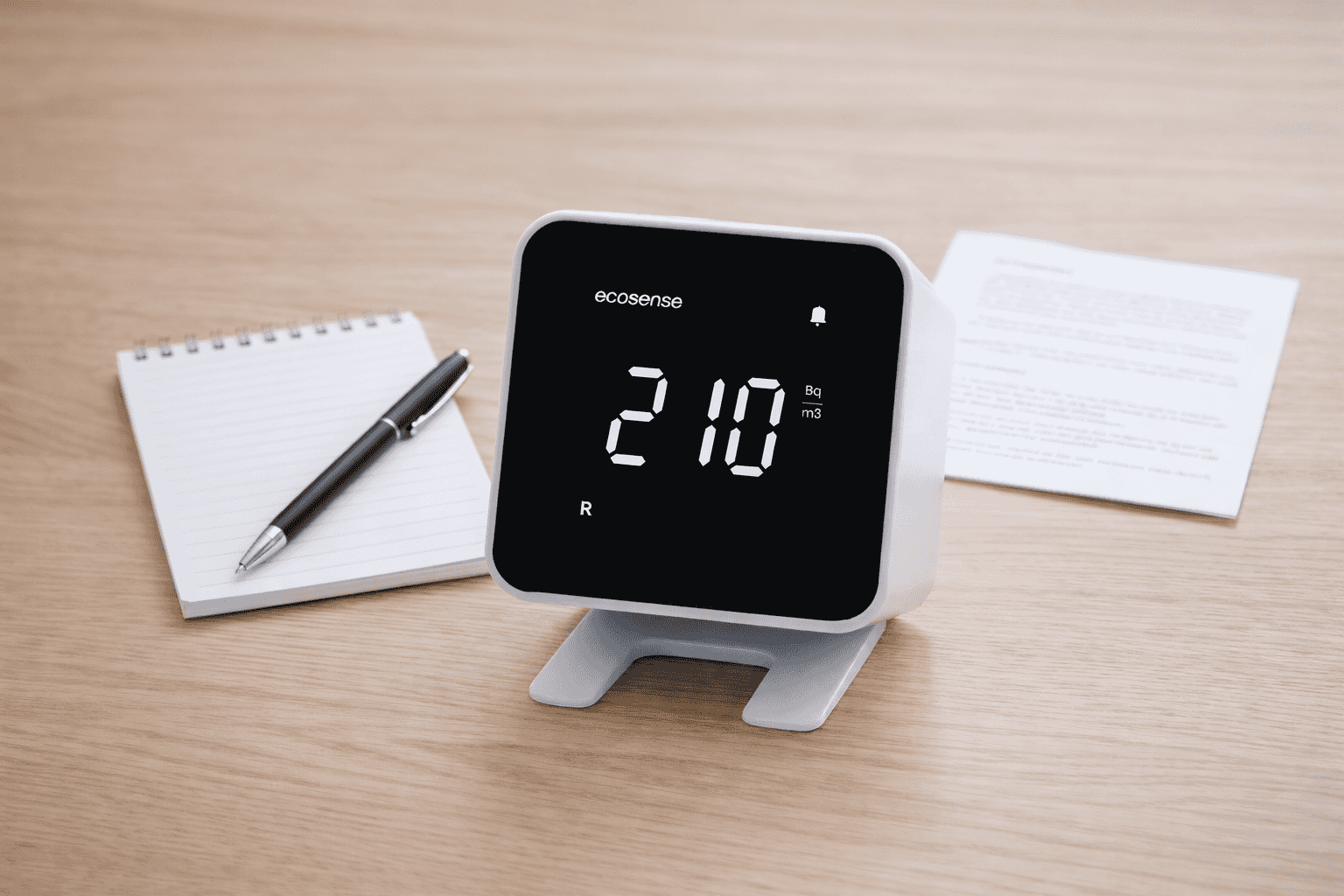
For example, manufacturers often position their products as part of a broader home approach, and a brand page like the EcoSense Home Solution resource can help you understand how that company expects you to use its tools and interpret data in a consumer-friendly way.
Retail listings can also make devices sound decision-ready right out of the box, and a product page like the Radon Market listing for an EcoSense “smart continuous” radon detector shows the type of feature-focused language consumers commonly see when shopping—connectivity, ease of use, “accurate” claims, and fast visibility.
Use those pages for what they’re good at:
Understanding features (Wi‑Fi, data logging, app graphs).
Understanding intended use and setup basics.
Then make your trust decision based on Canadian validation and proper testing practice:
Has the device passed C‑NRPP performance testing for long-term residential measurement?
Are you measuring long enough, in the right place, under the right conditions?
Are you verifying when the number is close to a key threshold?
That’s how you avoid false confidence and still benefit from the convenience of continuous monitoring.
About the Author
Ryan May
Senior Contributor / Founder
Ryan is the founder of Homeowner.ca and a proud Canadian homeowner based in Guelph, Ontario. Over his 25-year career in digital publishing, he has focused on transforming complex information into clear, practical guidance that helps people make confident, well-informed decisions.
It becomes trustworthy when its long-term average reflects a long-term test window rather than an early trend, and Health Canada’s definition of long-term testing in the residential measurement guide provides a practical baseline for what “long-term” means in Canada, which you can use to judge whether your monitor’s average has matured enough to act on.
Not necessarily. Radon can legitimately fluctuate within a day and across changing indoor conditions, so daily volatility is often a sign the device is sensitive enough to show real dynamics; the decision number is the stabilized long-term average, not the highest hour.
Use the long-term average that reflects months of continuous measurement in a lived-in space, because that’s the closest match to the “annual average” concept used for Canadian guidance.
It’s a space where people actually spend meaningful time, and the goal is to measure where exposure occurs—typically on the lowest lived-in level rather than a rarely used storage or utility area.
Only if the basement is part of your normal lived-in space (for example, a finished basement family room or bedroom). If it’s not used, the reading may not represent household exposure well, and a better approach is testing where people spend hours.
It’s better to place it at a realistic breathing height, because you’re estimating the air people breathe in that room; placing it on the floor also increases the risk of local microclimates and biased airflow effects.
You can test any time, but long-term testing that captures typical closed-home conditions (often during the heating season) is commonly recommended because it helps estimate the annual average more reliably; if you test only during a season with lots of open windows, your result may not reflect the rest of the year.
Compare them side-by-side for long enough that their longer averages stabilize, then focus on whether they reasonably agree over time rather than expecting identical hourly values.
A reading near the guideline is exactly where uncertainty matters most, so the smart move is confirmation: improve placement, extend the averaging period, or validate with a long-term test before you treat “just under” as a settled conclusion.
If your long-term average is consistently high, the numbers are confusing or conflicting, or you suspect your device/placement conditions may be compromising accuracy, then a certified measurement can provide a high-confidence reference point for your next decision.
Start with a directory of certified professionals so you’re not guessing about credentials, and the Canadian National Radon Proficiency Program directory is the most direct way to locate appropriately certified help for measurement verification.