A Practical Canadian Guide To Roofers, Red Flags, And The Right Questions To Ask

A new roof is one of the largest investments most Canadian homeowners will ever make in their home. It protects everything underneath—from your framing and insulation to your furniture and family—and it has to stand up to snow loads, wind, ice, and temperature swings that can move from freezing rain to summer heat in a matter of months.
When roofing jobs go wrong, they often go very wrong. Problems with home renovations are among the top consumer complaints in Ontario, with roofers making up a notable share of those issues according to Ontario’s consumer guidance on hiring a roofer which is a useful warning sign for homeowners across Canada as well. That kind of track record is exactly why you should treat choosing a roofer as seriously as choosing a financial advisor or a mechanic.
The challenge is that there is no single nationwide roofing licence that guarantees quality. In many provinces, roofing is not a compulsory trade, so experience, voluntary certifications, and reputation matter just as much as formal credentials according to Job Bank’s national roofing contractor requirements. At the same time, some jurisdictions—especially Quebec—layer on stricter trade rules and apprenticeship systems, which can be confusing if you are comparing contractors who work across provincial borders as described in Job Bank’s Quebec roofing trade profile.
This guide is designed to cut through that complexity. You will learn how roofing credentials actually work in Canada, what a proper inspection and quote should look like, how to spot red flags before you sign, and a concrete set of questions you can use when you meet contractors. Along the way, we will highlight key provincial nuances—for Quebec, Ontario, British Columbia, and the Atlantic and Prairie provinces—so you can tailor your approach to where you live using insights from IKO’s roofer licence overview.
The goal is not to turn you into a roofer. It is to give you a clear framework, grounded in Canadian realities and backed by primary sources, so that when you finally pick a company, you feel confident you are hiring a reputable professional—not rolling the dice.
Before you compare quotes or colours, it helps to understand what “qualified roofer” actually means in Canada. Typical employment requirements include completion of secondary school, several years of experience in the trade, and, in some cases, journeyperson trade certification according to Job Bank’s national roofing contractor requirements which sets a useful baseline for your expectations when you ask about a contractor’s background.
Across much of the country, roofing is a non-compulsory trade, meaning that training and trade certification are available but not legally required for all roofers according to IKO’s roofer licence overview which specifically notes provinces such as Saskatchewan, Manitoba, New Brunswick, Nova Scotia, Prince Edward Island, and Newfoundland and Labrador. In these regions, you cannot assume that a roofer has completed formal apprenticeship or trade schooling, so you should ask directly what training and experience each crew member has.
Quebec is the major exception: roofing trade certification is compulsory there, and roofers must complete roughly 4,000 hours of apprenticeship before progressing to journeyperson status under the Commission de la construction du Québec (CCQ) according to IKO’s roofer licence overview which outlines the province’s multi-stage training path. Job Bank reinforces that roofing trade certification is compulsory only in Quebec and voluntary elsewhere in Canada according to Job Bank’s Quebec roofing trade profile which is why Quebec homeowners can and should expect formal CCQ-backed credentials from their contractors.
Beyond provincial trade certification, many roofers pursue the Red Seal endorsement, which they can obtain after passing an interprovincial Red Seal exam according to Job Bank’s Quebec roofing trade profile that describes the Red Seal option for qualified tradespeople. For many roofers, this Red Seal credential is the primary formal certification and it simplifies working across multiple provinces by signalling they have met a national standard according to IKO’s roofer licence overview which explains how Red Seal supports interprovincial mobility.
Association memberships are another useful quality signal. Industrial, commercial and institutional roofing contractors must belong to their provincial roofing contractors association in order to become members of the Canadian Roofing Contractors Association (CRCA) according to the Canadian Roofing Contractors Association’s membership criteria which uses provincial membership as a prerequisite for CRCA membership. While membership alone does not guarantee perfect work, it shows that a company is engaged with industry standards and peer oversight.
You can use these elements—education, years in the trade, trade certification, Red Seal endorsement, and association membership—as building blocks in your vetting process. Rather than simply asking “Are you licensed?”, ask the roofer to walk you through their training path, any provincial or Red Seal certifications, and their memberships in provincial associations or CRCA, and then compare those answers against the expectations set out in Job Bank’s national roofing contractor requirements so that you can spot candidates who significantly underperform the norm.
You do not need to memorise every regulation; you just need a simple way to interpret what you are hearing. Use this table as a quick reference while you talk to contractors.
When you interview roofers, keep this table open and tick off each credential or signal as they provide proof; the strongest companies will usually be happy to show you documentation rather than just offering verbal assurances.

Canada’s roofing rules are a patchwork, so your due diligence should be tailored to your province rather than based on generic advice. The key divide is between Quebec—with its compulsory trade system—and provinces where roofing is not a compulsory trade but other forms of training and consumer protection still apply according to IKO’s roofer licence overview which maps out these differences.
In Quebec, roofers must complete two apprenticeship periods totalling about 4,000 hours and then work as journeypersons under CCQ oversight according to IKO’s roofer licence overview which provides a detailed description of the process. Job Bank confirms that roofing trade certification is compulsory only in Quebec, with other provinces treating it as voluntary according to Job Bank’s Quebec roofing trade profile which is why Quebec homeowners should treat lack of CCQ-issued certification as a serious red flag, not a minor paperwork issue.
Ontario takes a different approach: roofers are not licensed by the provincial government, and the province instead focuses on helping consumers research contractors, check the Consumer Beware List, and review Better Business Bureau alerts according to Ontario’s consumer guidance on hiring a roofer which clearly states that roofing contractors are not government-licensed. As a homeowner in Ontario, you should not expect a provincially issued roofing licence but you should absolutely use those consumer tools and insist on a detailed written contract backed by the Consumer Protection Act as explained in Ontario’s guide for home renovation and roofing businesses which outlines the legal requirements for contracts over $50.
In British Columbia, there is no specific provincial roofing licence either, but roofers can pursue trade certification and join the Roofing Contractors Association of BC, which is one of the key provincial associations mentioned in IKO’s roofer licence overview when it explains how BC homeowners can evaluate roofers. If you live in BC, a roofer who can show trade training and membership in the Roofing Contractors Association of BC has gone further than the minimum, which is valuable in a province known for heavy rain and complex roof assemblies.
In provinces such as Saskatchewan, Manitoba, New Brunswick, Nova Scotia, Prince Edward Island, and Newfoundland and Labrador, roofing is generally not a compulsory trade, but apprenticeship programs and certification pathways are still available through provincial authorities according to IKO’s roofer licence overview which highlights how training and certification remain voluntary in these regions. That means you should not assume every roofer has formal training, but you can deliberately favour companies that invest in certification and ongoing education.
Across all provinces, the underlying pattern is consistent: basic education, years in the trade, and (where available) journeyperson-style credentials are typical expectations for roofers according to Job Bank’s national roofing contractor requirements and you can use that pattern to filter out companies that cannot describe a clear training and experience pathway for their crews.
Use this summary as a conversation starter—not as a substitute for checking your own provincial rules.
Regardless of your province, you should always check municipal permit requirements separately, because building departments may require permits or inspections for major roofing work even when the trade itself is not compulsory.
A reputable roofing company does not price your job from the curb or from satellite imagery alone. They will insist on a proper inspection because they know that hidden problems—rotted sheathing, poor ventilation, or saturated insulation—can radically change the scope of work and the materials required.
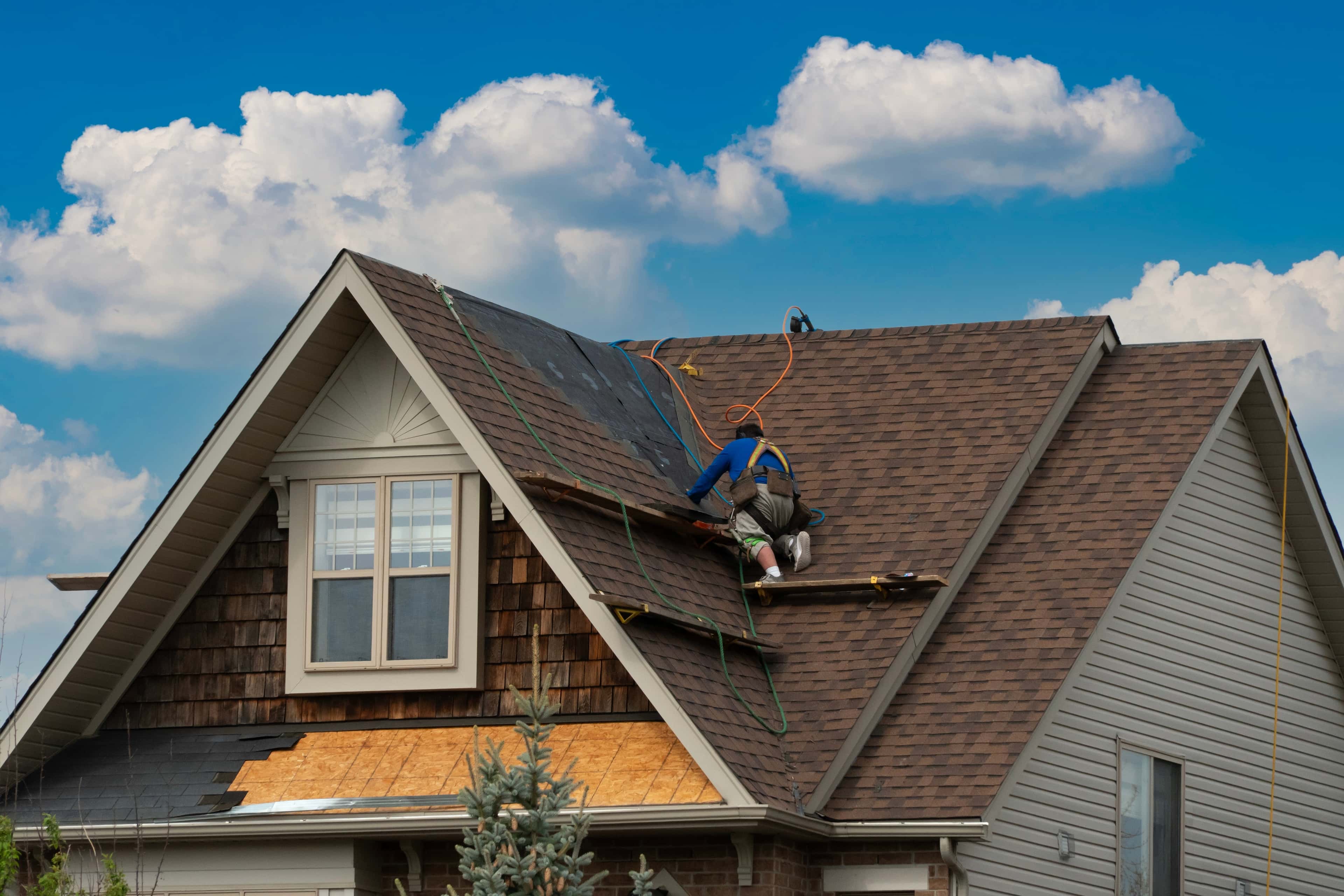
At a minimum, expect a three-part process: a walk-around exterior inspection, an attic or interior check where accessible, and a sit-down discussion about your goals and budget. The crews doing this work should also be trained to work safely at heights, especially on steep-slope roofs, because Ontario’s consumer guidance specifically advises you to verify that workers have appropriate fall-protection and working-at-heights training according to Ontario’s consumer guidance on hiring a roofer which is a useful safety benchmark even outside Ontario.
Here is what a thorough inspection typically includes:
Use this table to track what you see the roofer doing during the visit.
If an estimator spends more time talking about discounts than actually examining your roof, or refuses to access the attic when it is reasonably accessible, treat that as a warning sign that their quote may be based on guesswork rather than a real assessment.
Once the inspection is complete, you should receive a written quote—not a vague verbal ballpark. In Ontario, any home renovation or roofing contract worth more than $50 must be in writing under the Consumer Protection Act according to Ontario’s guide for home renovation and roofing businesses which also applies to many other trades and underscores why you should insist on written documentation.
A compliant roofing contract in Ontario must include key details such as the contractor’s business name and address, an itemised list of products and services, total cost including taxes, payment terms, and a work schedule with start and completion dates according to Ontario’s guide for home renovation and roofing businesses which sets a strong benchmark for what a serious quote should look like anywhere in Canada. The same guidance notes that contracts should also indicate any sub-trades being used and how changes will be handled, which helps you avoid surprises mid-project according to Ontario’s guide for home renovation and roofing businesses so you can spot vague or incomplete paperwork as a red flag.
Ontario also recommends that deposits for renovation and roofing contracts be no more than about 10% of the total project cost, framing that level as a fair practice within the industry according to Ontario’s guide for home renovation and roofing businesses which means that very large deposits should immediately prompt harder questions or a decision to walk away. While other provinces may not explicitly state a percentage, this 10% guideline is a practical yardstick you can use anywhere when judging deposit requests.
Use this comparison to decode each line of your estimate.
Treat it as a serious warning if a roofer refuses to provide a written quote, demands a very large cash deposit, cannot clearly explain what is included in the price, or pressures you to sign on the spot “before the discount expires”—those behaviours often show up in the same complaints that Ontario tracks for problem renovation and roofing jobs according to Ontario’s consumer guidance on hiring a roofer which highlights high-pressure tactics as a risk factor.
Strong questions are your best defence against poor workmanship and vague promises. Rather than improvising in the moment, you can follow a simple script that covers experience, credentials, safety, climate-specific expertise, and contract terms.
Job Bank notes that typical employment requirements for roofers include completion of secondary school and several years of related trade experience according to Job Bank’s national roofing contractor requirements which means that “How long have you been in the trade?” is more than small talk—it is a core screening question. For Quebec or for contractors working across provinces, asking about Red Seal or CCQ certification gives you insight into their formal training path as described in Job Bank’s Quebec roofing trade profile which outlines both compulsory certification and Red Seal options.
Ontario explicitly advises homeowners to ask whether roofing workers have proper fall-protection and working-at-heights training and to avoid hiring any contractor who cannot confirm that workers are trained and equipped for safety according to Ontario’s consumer guidance on hiring a roofer which also stresses that you should not allow anyone to work on your roof if they cannot explain their safety plan. That guidance is just as sensible in other provinces, where a fall on your property can still expose you to risk if the contractor does not have proper training or insurance.
Use these sample questions at each stage of the process.
Print this table and bring it to your meetings; write down each contractor’s answers beside the questions so you can compare responses later without relying on memory or being swayed by personality alone.
Even the best credentials do not guarantee a positive experience if the company is disorganised or dismissive once the job starts. That is why you should always check real-world reputation using references, reviews, consumer complaint tools, and association memberships.
Ontario notes that home renovation problems—many involving roofers—are among the top consumer complaints, which is why the province encourages homeowners to research contractors, check the Consumer Beware List, and review Better Business Bureau alerts according to Ontario’s consumer guidance on hiring a roofer which you can treat as a model for diligent background checking. Even if you are outside Ontario, equivalent consumer agencies and review sites in your province can help you spot patterns of complaints, not just one-off issues.
For larger or more complex projects, association membership becomes especially useful. The Canadian Roofing Contractors Association requires industrial, commercial and institutional roofing contractors to first be members of their provincial roofing contractor association before becoming CRCA members according to the Canadian Roofing Contractors Association’s membership criteria which effectively creates a two-level filter based on provincial and national standards. While residential-only roofers may or may not belong to CRCA, membership in a respected provincial association can still signal commitment to training, safety, and ethical business practices.
In provinces such as British Columbia, where there is no specific provincial roofing licence, membership in organisations like the Roofing Contractors Association of BC is a key sign of professionalism according to IKO’s roofer licence overview which lists association membership as a core quality indicator. When a contractor claims to be part of such an association, ask for the exact name and look it up yourself rather than taking their word for it.
When you ask for references, request at least one recent job (completed within the last year) and one older job (3–5 years old) so you can see how the roof is holding up over time; a reputable company will have no trouble providing both, especially if they have been meeting the experience expectations described in Job Bank’s national roofing contractor requirements which emphasise several years of experience.
All the due diligence in the world will not protect you if you sign a contract you do not understand. Before you put your name on anything, slow down and make sure the paperwork reflects everything you have discussed.
Ontario’s guide for home renovation and roofing businesses explains that for contracts worth more than $50, written agreements must include specific information such as business contact details, an itemised list of products and services, total cost with taxes, payment terms, and a work schedule according to Ontario’s guide for home renovation and roofing businesses which provides a detailed checklist you can mirror in your own province. That same guide stresses the importance of clearly identifying any sub-trades (such as electricians for attic fans) and explaining how changes will be documented and approved according to Ontario’s guide for home renovation and roofing businesses which helps you avoid “scope creep” later on.
Deposits deserve special attention. Ontario suggests that deposits for renovation and roofing contracts should generally be no more than about 10% of the total price, with the balance paid in stages and a final payment upon completion according to Ontario’s guide for home renovation and roofing businesses which you can use as a practical benchmark even if your province does not specify a percentage. If a roofer demands a much higher deposit—especially if they frame it as a non-refundable “material order” fee—ask why it is so high, and be prepared to walk away if the answer is not convincing.
If you are in Ontario and you signed a roofing contract worth $50 or more in your home (for example, at your kitchen table after a door-to-door pitch), you are generally covered by a 10‑day cooling-off period during which you can cancel for any reason without cancellation fees under the Consumer Protection Act according to Ontario’s consumer guidance on hiring a roofer which classifies these as “direct agreements.” That window gives you valuable breathing room if you feel pressured or if, after reading the contract more closely, you realise it does not match what you were promised.
Never sign a contract you feel rushed into, and never pay a deposit you are uncomfortable with; there are always other roofing companies, but you only have one roof, and your rights under consumer protection laws—like the cooling-off period in Ontario—only help you if you are willing to use them as explained in Ontario’s consumer guidance on hiring a roofer which emphasises the importance of exercising your cancellation rights when necessary.
It depends where you live and what you mean by “licensed.” In Ontario, for example, roofers are not licensed by the provincial government, and the focus is instead on written contracts and consumer protection tools such as the Consumer Beware List according to Ontario’s consumer guidance on hiring a roofer which explains that there is no specific provincial roofing licence. In Quebec, roofing is a compulsory trade, so contractors must hold trade certification under the CCQ as described in Job Bank’s Quebec roofing trade profile and you should treat the absence of that certification as a serious warning sign.
A business licence (or municipal licence) usually proves that the company is registered to operate and pay taxes, while trade certification shows that an individual worker has completed formal training and met competency standards in the roofing trade according to Job Bank’s national roofing contractor requirements which distinguish between employment requirements and trade credentials. In Quebec, trade certification is compulsory; in many other provinces, it is voluntary, so you should ask specifically whether crew members hold trade or Red Seal certification as explained in Job Bank’s Quebec roofing trade profile which lists Red Seal as an option for qualified roofers.
In Quebec, you should ask for the roofer’s CCQ-issued trade certification and confirm they have completed the required apprenticeship and journeyperson periods, which total about 4,000 hours according to IKO’s roofer licence overview that describes the province’s training structure. Job Bank also notes that roofing trade certification is compulsory in Quebec, unlike in other provinces, so you can use Job Bank’s Quebec roofing trade profile as a reference when you compare candidates who claim to meet those requirements.
Red Seal is a nationally recognised endorsement for trades; roofers who pass the interprovincial Red Seal exam can work across provinces more easily according to Job Bank’s Quebec roofing trade profile which explains how Red Seal applies to roofers. IKO notes that in many provinces and territories, Red Seal certification is effectively the main formal credential for roofers and that it simplifies work in multiple jurisdictions according to IKO’s roofer licence overview so while you may not need every crew member to be Red Seal certified, it is a strong plus when a company’s lead installers hold this credential.
Extremely low quotes often reflect shortcuts in scope, materials, or safety rather than genuine efficiency. Ontario reports that home renovation problems, many involving roofing, are among the most common consumer complaints and warns homeowners to be cautious about offers that seem too good to be true according to Ontario’s consumer guidance on hiring a roofer which emphasises the risk of high-pressure sales and vague promises. Compare the low quote against the checklist in Ontario’s guide for home renovation and roofing businesses to see whether it includes the same level of detail and protections as the higher-priced options.
In Ontario, a roofing or renovation contract over $50 must include the contractor’s name and contact information, an itemised list of products and services, total cost with taxes, payment schedule, start and completion dates, and any sub-trades involved according to Ontario’s guide for home renovation and roofing businesses which lays out these contract requirements in detail. Even if you live elsewhere, that list is an excellent benchmark to use when reviewing your contract so that you do not sign off on vague or incomplete terms.
Ontario suggests that deposits for renovation and roofing contracts generally be no more than about 10% of the total project cost, with the remainder paid in stages and a final payment on completion according to Ontario’s guide for home renovation and roofing businesses which uses this percentage as a fair practice guideline. If a roofer asks for a much larger deposit—especially if it is framed as non-refundable—consider that a red flag and compare their request with other contractors.
If you signed the contract in your home and the value is $50 or more, it is usually considered a “direct agreement” under Ontario’s Consumer Protection Act, which gives you a 10‑day cooling-off period to cancel for any reason without cancellation fees according to Ontario’s consumer guidance on hiring a roofer which explains how the cooling-off period applies to door-to-door and in-home agreements. Act quickly if you decide to cancel, and follow the written cancellation instructions provided in the contract or by the province.
Ask for proof of working-at-heights and fall-protection training for crew members, and have the contractor explain their safety plan for your specific roof. Ontario explicitly advises homeowners to verify that roofing workers have appropriate safety training and to avoid hiring contractors who cannot confirm this according to Ontario’s consumer guidance on hiring a roofer which also highlights the risk of allowing untrained individuals to work at height.
Some reputable companies do canvass neighbourhoods after storms, but door-to-door offers are also a common source of complaints about high-pressure sales and rushed decisions according to Ontario’s consumer guidance on hiring a roofer which lists aggressive sales tactics among the warning signs. Treat any on-the-spot offer as a starting point only, and never sign a contract or pay a deposit immediately; instead, research the company, ask for references, and compare at least one or two additional quotes.
Many homeowners find that three detailed, comparable quotes strike the right balance between choice and information overload. Since typical employment requirements for roofers include several years of experience and, in some cases, journeyperson certification according to Job Bank’s national roofing contractor requirements using multiple quotes lets you see which companies meet or exceed that standard in practice.
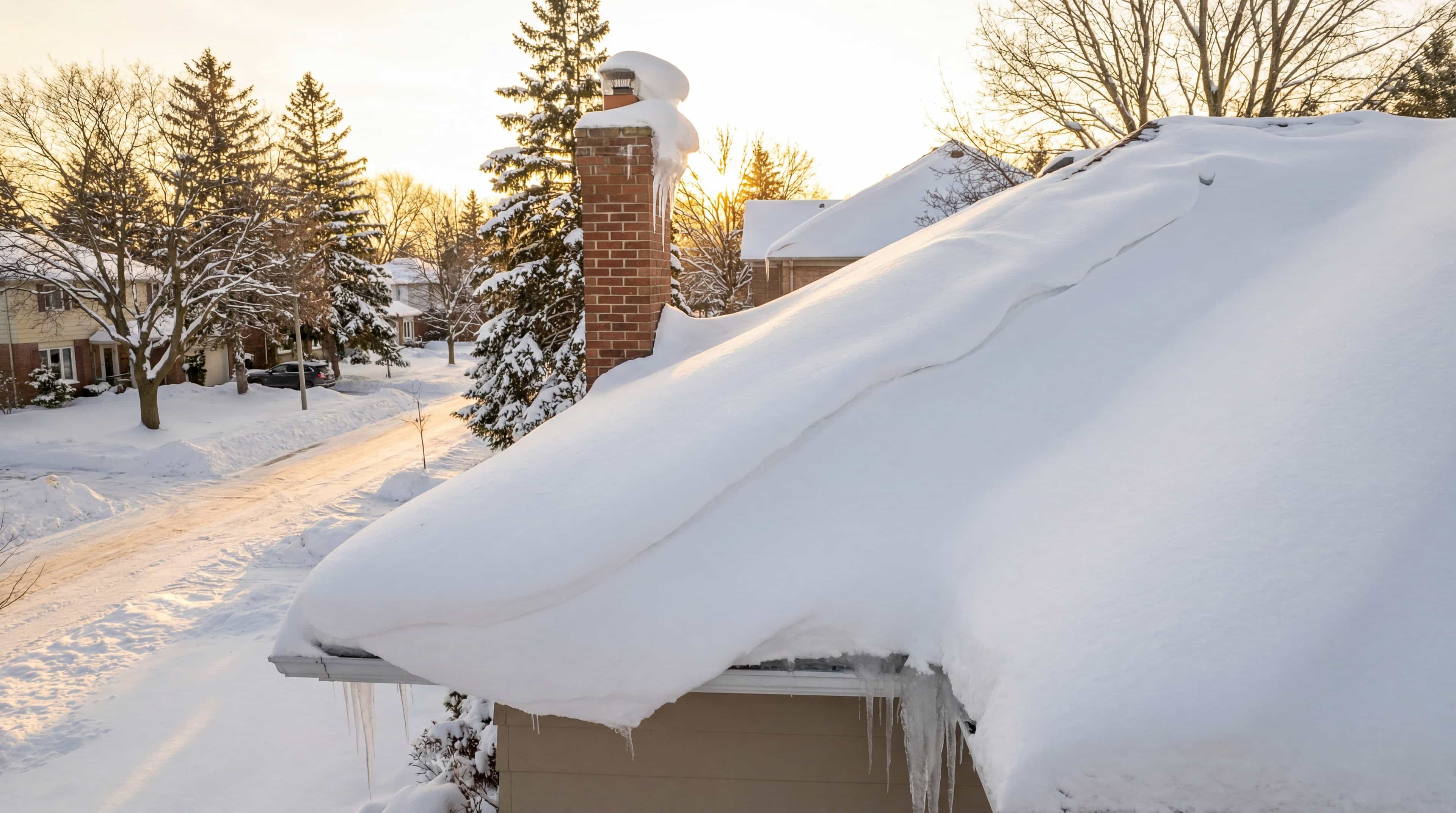
Ask how the roofer designs for your specific climate: “How will this roof handle snow loads, ice dams, wind-driven rain, and freeze–thaw cycles in this area?” For example, a knowledgeable contractor should describe how underlayment, ventilation, and insulation work together, particularly in regions with heavy snow or Atlantic storms, and their explanation should align with the kind of experience and training pathways outlined in IKO’s roofer licence overview which emphasises climate-appropriate roofing systems.
For larger or more complex roofs—especially commercial or multi-unit properties—CRCA membership can be a strong signal that a contractor meets certain professional standards, because industrial, commercial and institutional roofing contractors must first join their provincial roofing association before joining CRCA according to the Canadian Roofing Contractors Association’s membership criteria which sets a clear membership pathway. For residential projects, provincial association membership is still valuable because it supports ongoing training and access to industry best practices.
You can, but you should ask who will actually perform the roofing work and what their trade credentials and experience are. Given that typical expectations include several years of roofing-specific experience and, in some cases, journeyperson or Red Seal certification according to Job Bank’s national roofing contractor requirements it is generally safer to ensure that the people on your roof are dedicated roofers rather than all-purpose labourers.
Manufacturer warranties on materials can range widely, but what matters most is the labour or workmanship warranty the contractor offers on their installation. Because the Consumer Protection Act in Ontario expects clear, written contract terms including itemised products and services according to Ontario’s guide for home renovation and roofing businesses you should insist that all warranty terms be spelled out in writing, including duration, coverage, and exclusions.
Warning signs include lack of a physical address, refusal to provide written quotes, very large cash-only deposits, and no evidence of training, certification, or association membership. Ontario’s experience with renovation and roofing complaints shows that many problems begin with these early red flags according to Ontario’s consumer guidance on hiring a roofer so if you see several of them at once, it is safer to move on. You can also favour companies that meet the typical experience expectations described in Job Bank’s national roofing contractor requirements and that participate in provincial or national roofing associations.