Radon Testing for Home Sales in Canada: What Buyers and Sellers Should Ask For
A Transaction-Focused Playbook for Reports, Timing, Condos, and Negotiations
By
Published: March 14, 2026
Updated: March 15, 2026
Credit: Homeowner.ca
Key Takeaways
•Treat 200 Bq/m³ as the central benchmark, but don’t treat any single short test as the final answer.
•In a tight deal timeline, aim for credible screening now and definitive long-term testing later, using clear paperwork to bridge the gap.
•The best radon outcomes in a transaction come from documentation quality (how it was tested) as much as the number itself.
Radon is one of those home-sale topics that becomes “urgent” only because a deal timeline makes it urgent. Buyers want certainty; sellers want clean conditions; agents want the transaction to stay orderly. The friction happens because high-quality radon decisions usually require time, while real estate negotiations usually don’t.
So a practical radon plan for a Canadian home sale isn’t just “test or don’t test.” It’s a due-diligence strategy that answers three questions in the order that matters:
What result would change the deal?
How confident is the measurement behind that result?
What documentation will still make sense after closing, if the plan involves follow-up?
A lot of confusion comes from mixing up two different goals. One goal is transaction screening—a fast, structured assessment that helps you decide whether to negotiate, retest, or set money aside. The other goal is health-based decision-making, which relies on long-term measurements that better represent how the home behaves over time.
If you’re wondering why this feels harder than other inspection items, it’s because the national health authority itself recognizes the timing mismatch: in Health Canada’s radon guidance for real estate transactions it notes that radon testing is better done before listing or after closing rather than during a live deal, and it even points to contractual workarounds like holdbacks that let buyers test properly post-transaction.
That’s the lens this article uses. Not “radon 101,” and not deep technical mitigation design—just what buyers and sellers should ask for so the outcome is defensible, negotiable, and documented.
Advertisement — Article Continues Below
Anchor the Deal to the 200 Bq/m³ Benchmark
Use One Shared Reference Point Before You Negotiate Anything
If you only remember one number from radon conversations in Canadian real estate, make it the national guideline. The most transaction-useful way to frame “high” radon is the Health Canada radon guideline of 200 Bq/m³ as an annual average in the normal occupancy area, because that’s the threshold that typically drives corrective-action conversations in Canada.
That benchmark does three important jobs in a deal:
It prevents vague language (“a bit elevated”) from driving pricing decisions.
It gives both sides a neutral reference point for conditions, credits, and timelines.
It separates the number from the confidence in the number—which is where many disputes actually live.
How Buyers Should Use the Benchmark
A buyer doesn’t need the home to be “perfect” to proceed. They need to understand:
Whether the reading suggests likely mitigation, and
Whether the test method is strong enough to justify negotiating money today.
If the measurement is long-term and above the guideline, negotiation becomes straightforward: mitigation (or a credit) is a reasonable ask because the result is already decision-grade. If the measurement is short-term, the right move is often to negotiate the process (retesting, holdback, or post-closing verification) rather than overreacting to a single number.
How Sellers Should Use the Benchmark
Sellers get the most leverage when they can show:
The home was tested in a credible way, and
If the result was elevated, it was handled in a documented way.
A clean paper trail reduces “fear discounting,” where buyers assume the worst because the documentation is thin. Even when radon is elevated, a seller who can say “we tested properly, we got a quote, we have a plan” often keeps negotiations calmer than a seller who says “we did a quick test once and it seemed fine.”
Important
The benchmark is about how to make a decision, not about winning an argument. In negotiations, the most persuasive position is usually “we’re following a recognized guideline and a credible testing process,” not “we read something online.”
Advertisement — Article Continues Below
Choose the Right Test for the Deal Timeline
Separate “Decision-Grade” Testing from “Transaction-Grade” Screening
The hardest truth in radon negotiations is that the most reliable answer often takes longer than your conditional period. Health-based decisions are built on long-term measurements: in Health Canada’s residential radon measurement guide the agency states that a three-month (minimum 91-day) test is the way to accurately determine radon levels in a home, and it prefers long-term testing during the heating season for the strongest representation of typical exposure.
That doesn’t mean you can’t do anything inside a deal window. It means you should stop expecting a two- or five-day test to play the role of a 91-day test. Once you separate those roles, the strategy becomes much clearer.
A Simple Test-Type Decision Table
Situation in the Transaction
Best-Fit Measurement Approach
What You’re Actually Buying (Confidence)
How It Usually Affects Negotiation
Seller wants to de-risk the listing before photos and showings
Long-term test completed ahead of listing
Decision-grade baseline
Cleaner disclosure; fewer conditional surprises
Buyer has a tight conditional period and wants a quick read
Structured short-term screening
Negotiation signal, not final answer
Triggers retest, mitigation quote, or holdback
Buyer wants certainty but closing is soon
Contract to allow post-closing long-term testing
Real certainty after possession
Holdback/credit language becomes the key document
After mitigation work is done
Post-mitigation verification test
Proof the fix worked
Releases holdbacks; protects future resale story
The Practical Buyer Question to Ask
Instead of “Did the house pass radon?” ask:
“What decision are we trying to make with this test?”
“What kind of test supports that decision?”
“If we can’t do the ideal test now, what paperwork keeps us protected?”
That mindset moves you away from emotional negotiating and toward process-based negotiating, which is where radon due diligence tends to land best in real estate.
Note
When a seller provides an older report, the buyer’s real question is rarely “What was the number?” It’s “Can I trust the method, the placement, and the occupancy assumptions enough to treat this as meaningful for my family’s use of the home?”
If You Test During the Deal, Make It a Recognized Screening Assessment
Avoid Ultra-Short Tests and Unstructured “Drive-By” Numbers
Short-term radon testing exists for a reason: real estate timelines are real. The key is using a short-term approach that’s structured, duration-appropriate, and clearly labelled as screening.
In the Canadian transaction context, the Canadian Association of Radon Scientists and Technologists describes a “Real Estate Screening Assessment” in its real estate guidance as a short-term assessment designed to fit deal timelines—typically several days—while reinforcing that the long-term (91+ day) test remains the standard for mitigation decisions.
What a Credible Short-Term Screening Should Look Like in Practice
A screening result becomes negotiation-relevant when it’s supported by process:
Duration is not “too short to matter.” If someone offers a one-hour or same-day “radon check,” it’s not a credible basis for a price reduction or a condition.
The report clearly states it’s screening, not a long-term average.
The setup follows closed-house expectations, and the report documents whether those conditions were maintained.
You’ll also see a “traffic light” style interpretation referenced in real estate screening guidance—useful as a communication tool, but only if everyone remembers what it is: a way to decide “do we need to go deeper,” not a substitute for long-term certainty.
How to Use Screening Results Without Overplaying Them
A transaction-friendly way to act on screening is:
If screening suggests higher levels, negotiate for either (a) mitigation steps, (b) a professional quote and price adjustment, or (c) a post-closing long-term test backed by a holdback.
If screening suggests lower levels, treat it as “no immediate red flag,” not as a guarantee that the long-term average will be below the guideline.
Warning
The biggest transaction risk with short-term radon testing isn’t that it finds something—it’s that it produces a number that feels definitive, and both sides negotiate as if it’s decision-grade.
Advertisement — Article Continues Below
Validate the Setup: Placement and Closed-House Conditions
A Good Device in a Bad Location Produces a Bad Transaction Outcome
Radon negotiation disputes often come down to one thing: someone doesn’t trust the setup. Buyers suspect the test was placed “where it reads low.” Sellers suspect buyers are using radon as leverage with weak methods. You can prevent most of that by focusing on placement and conditions early.
Placement Questions That Matter
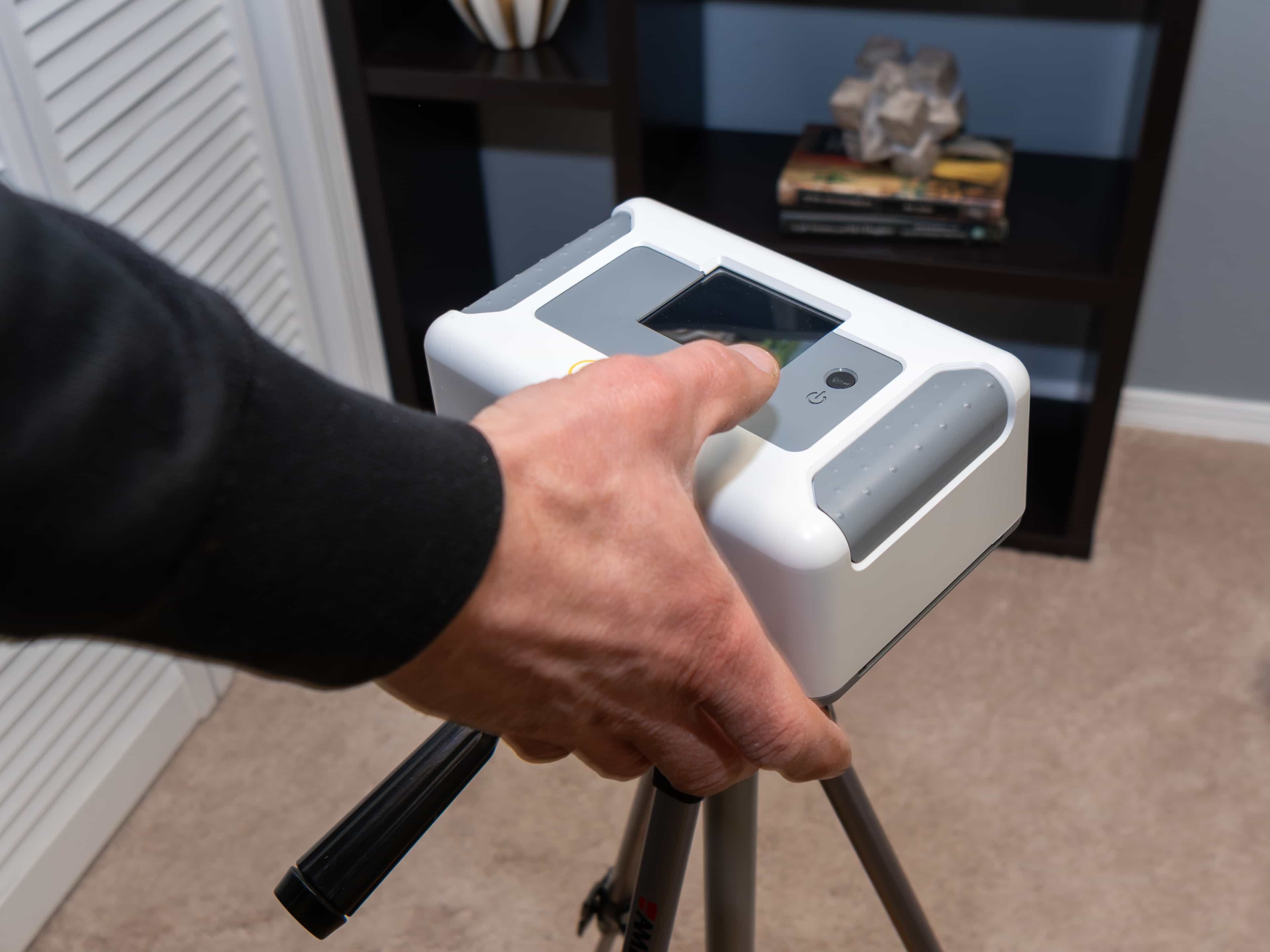
Health Canada provides specific placement guidance that can be turned into a checklist. In Health Canada’s residential measurement guide it notes that detectors should be placed in the lowest lived-in level where someone spends meaningful time, positioned near an interior wall and at a typical breathing height, and kept away from kitchens, bathrooms, crawlspaces, drafts, and other atypical airflows.
For transactions, turn that into plain-language verification:
Which level was tested, and is it actually used daily? (Finished basement rec room vs unfinished storage.)
Was it placed where people breathe, not on the floor or a windowsill?
Was it kept away from air movement sources like vents, exterior doors, or frequently used windows?
Closed-House Conditions: The Quiet Deal-Killer
Short-term tests are sensitive to how “open” the house is. Many screening protocols rely on closed-house conditions, which generally means windows closed and exterior door openings limited to normal entry/exit. The best transaction outcomes happen when the report explicitly states what conditions were required and what was actually done.
For buyers, the key due diligence is: did the seller agree to and follow the conditions that make the screening meaningful? For sellers, the key protection is: did you keep a simple log and avoid actions that undermine your own report?
Tip
If a buyer is requesting a screening test during the conditional period, put “closed-house cooperation” into the plan on day one: agree on window expectations, showings, fan use, and who is responsible for day-to-day compliance. A test that both sides distrust is worse than no test.
A radon number without context is easy to challenge. A report with method details is harder to dismiss, easier to negotiate around, and more useful after closing.
The Non-Negotiables in a Transaction-Useful Report
Ask for a report that clearly states:
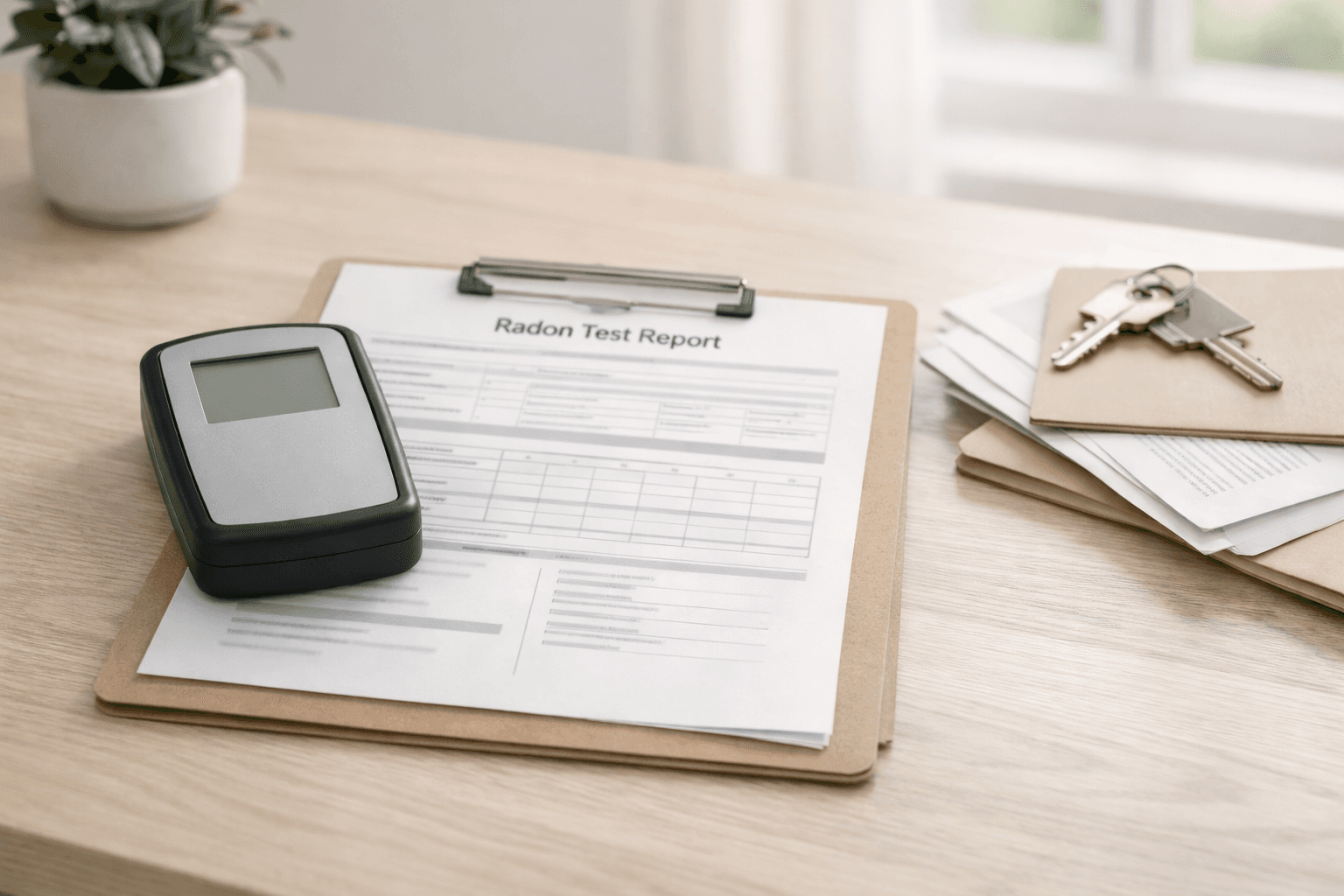
Test type and duration (screening vs long-term, start/end dates, total days).
Device type and whether it’s professional-grade or consumer-grade.
Placement details (level of the home, room name, approximate height, and proximity notes).
Closed-house condition requirements (for short-term tests) and whether they were followed.
Result reporting format (Bq/m³) and whether the result is a snapshot or a long-term estimate.
Who conducted the test (homeowner DIY, inspector add-on, or a dedicated radon professional).
Red Flags That Should Trigger Questions (Not Panic)
A few patterns consistently create negotiation problems:
Missing duration details (“tested last week” with no start/end).
Vague placement (“main floor” without identifying the room or height).
No mention of conditions during a short-term measurement.
A result delivered as a casual text message or screenshot with no report structure.
None of these automatically mean the radon is high or low. They mean you don’t have the documentation quality required to negotiate confidently. In a real estate deal, documentation quality is a form of value.
A Simple Script Buyers Can Use
When you want to stay calm and factual, try:
“Can you share the full report showing duration, placement, and test type?”
“Was this intended as a screening assessment or a long-term measurement?”
“If this was short-term, can we confirm closed-house conditions were followed?”
That script signals you’re not trying to create drama—you’re trying to create clarity.
Advertisement — Article Continues Below
Condos, Strata Buildings, and Multi-Storey Homes Need a Different Plan
“One Test for the Whole Building” Is Usually the Wrong Mental Model
Condo buyers often get stuck in a logic trap: “Radon comes from the ground, so my unit on a higher floor must be fine.” The more defensible approach is simpler: test the spaces you actually occupy.
In guidance aimed at real estate professionals, the BC Financial Services Authority notes—referencing Health Canada—that in taller residential buildings, radon testing should be conducted on each occupied floor, focusing on areas used for four or more hours per day, as outlined in BC Financial Services Authority radon precautions information for transaction awareness.
What This Means for Condo Buyers
If you’re buying a multi-level unit (for example, a townhouse-style condo with a lower level), you don’t want a single test result that ignores a floor where you’ll actually spend time.
A practical condo due-diligence plan might include:
Testing the lowest occupied level of the unit (even if it’s not “below grade”).
If the unit has multiple occupied levels, planning measurements that reflect how the space is used.
Asking whether the building has any radon history or prior mitigation work (and requesting documentation if it exists).
What This Means for Sellers (and Listing Agents)
For condo sellers, the goal is to avoid overpromising. Instead of saying “the building is fine,” stick to what’s documentable:
What was tested (your unit, which level, which rooms)
When it was tested
What the results were
What follow-up plan is available if a buyer wants long-term confirmation
This keeps your disclosure accurate and reduces the risk of a buyer feeling misled later.
Hire Certified Help When the Result Will Affect Money
Credentials Matter More When the Outcome Becomes a Contract Term
Not every radon test needs to be done by a professional. But once a radon result becomes part of price negotiations, conditions, or holdback release terms, it’s smart to raise the credibility bar.
The practical Canadian move is to find someone who can both measure and document in a way that stands up inside a transaction. The Canadian National Radon Proficiency Program is described as a national certification program with a public directory in the Canadian National Radon Proficiency Program website where consumers can search for certified measurement and mitigation professionals.
When a Professional Is Worth It
Consider bringing in a certified radon professional when:
The buyer wants a screening assessment that both sides will respect.
The seller wants a pre-listing test that reduces renegotiation risk.
A mitigation quote is needed to set a credit or price adjustment.
Post-mitigation verification needs to be documented cleanly for holdback release.
The Transaction Value of “Professional-Grade” Isn’t Technical—It’s Practical
A professional approach tends to deliver:
Better documentation
Clearer reporting language (“screening” vs “long-term”)
Fewer disputes about placement and conditions
Less buyer anxiety, because the process feels standardized
In a negotiation, that can matter as much as the reading itself.
Important
If you’re using a radon number to move thousands of dollars around, treat the measurement like a financial document: it should be traceable, legible, and defensible.
Advertisement — Article Continues Below
Negotiate the Process, Not Just the Number
The Best Radon Deals Are Built on Clear “If/Then” Paperwork
Radon is solvable, but it’s also easy to mishandle contractually. The highest-friction transactions are the ones where everyone agrees “we should do something,” but nobody agrees on exactly what “something” means.
A transaction-ready radon negotiation usually includes three parts:
A measurement plan (what test, when, where)
A decision rule (what happens if results are above the benchmark)
A documentation rule (what proof is required, and who pays)
The Holdback Strategy (When Timing Is Tight)
When the conditional period can’t support long-term testing, a holdback can bridge the gap. Health Canada explicitly notes that some professionals are using contractual holdbacks—funds retained after closing—to allow long-term testing and pay for mitigation if needed, as described in Health Canada’s radon guidance for real estate transactions as a process-based workaround.
A good holdback agreement is specific. It should define:
The amount held back and where it’s held
The time window to complete the long-term test post-closing
The decision threshold (often anchored to the Canadian guideline benchmark)
The release conditions (what proof releases funds to whom)
What happens if access is refused or deadlines aren’t met
When Screening Happens Pre-Closing: A Practical Sequence
If you’re going to run a short-term screening during the deal, a calm, scalable negotiation sequence looks like this:
Agree in writing on closed-house cooperation and test placement.
Run a screening assessment within the conditional window.
If screening suggests elevated risk, obtain at least one mitigation quote promptly.
Choose one of three outcomes: mitigation completed pre-closing, a credit/price adjustment, or a holdback for post-closing long-term confirmation and remediation.
This keeps everyone moving forward without pretending a short-term number is the final word.
Tip
Buyers often get better results by requesting “a radon plan” than by demanding “a radon fix” immediately. Sellers can agree to a plan without conceding the worst-case interpretation of an early screening number.
Advertisement — Article Continues Below
Respect Seasonality Without Over-Interpreting One Reading
Radon Fluctuates, and Your Negotiation Language Should Reflect That
Radon readings can vary over time, which is one reason long-term testing is treated as the gold standard. In real estate, seasonality becomes a practical question: when was the test done, and does that timing make it more or less representative of the way the home is normally lived in?
The most useful takeaway for transactions is not “winter is higher” or “summer is lower” as a rule. It’s this: a single short-term test is best treated as a signal that guides next steps, while a long-term test—especially one aligned with typical living patterns—supports higher-confidence decisions.
How Buyers Should Phrase Seasonality Concerns
Instead of rejecting a report because it was done in a different season, ask:
“Was this a screening result or a long-term result?”
“If it was screening, what’s our plan to confirm long-term levels after possession?”
“Can we structure the contract so the long-term measurement is done when the home is lived in normally?”
That language is collaborative and keeps the negotiation focused on process rather than suspicion.
How Sellers Can Reduce Seasonality Anxiety
Sellers can reduce buyer concern by:
Explaining how the tested area is used (for example, “finished basement office used daily”)
Providing a clear timeline and method statement
Offering a practical plan for confirmation if the buyer wants longer-term reassurance
The goal isn’t to “win” the radon debate. It’s to leave the closing table with a plan that still makes sense three months later.
Advertisement — Article Continues Below
Close the Loop After Closing
Verification and Documentation Protect Future Resale Value
Even when a transaction handles radon well, the long-term value comes from what happens next: confirmation testing and clear documentation. This is especially important if a holdback is involved, or if mitigation is completed either before or after closing.
A clean post-closing radon workflow usually includes:
Completing the agreed long-term test in the agreed area(s)
If mitigation is required, keeping invoices, scope notes, and installer details
Running post-mitigation verification and saving the report in the home’s maintenance file
Providing documentation to the other party if the contract requires it for fund release
The “home file” concept matters here. A future buyer will care less about your memory of what happened and more about what you can show.
Note
Treat radon documentation like you would a roof warranty or a sewer scope report: it’s part of the home’s record. A well-documented fix can turn a stressful negotiation topic into a proof point of responsible ownership.
About the Author
Ryan May
Senior Contributor / Founder
Ryan is the founder of Homeowner.ca and a proud Canadian homeowner based in Guelph, Ontario. Over his 25-year career in digital publishing, he has focused on transforming complex information into clear, practical guidance that helps people make confident, well-informed decisions.
In most transactions, radon testing isn’t a universal “must-do” item like smoke alarms, but it can come up through buyer due diligence, disclosure discussions, or regional norms. The practical question is whether radon risk is being priced into the deal—if it is, you want a plan that produces credible documentation, not just a quick number that neither side trusts.
Not automatically. The best approach is to match the testing plan to the timeline. If your conditional period is short, a structured screening assessment can help guide negotiation, but a long-term test is what supports confident decisions. When timelines don’t allow a long-term test, consider negotiating a post-closing plan (often via a holdback) instead of forcing a rushed result.
In Canada, the most common benchmark used in negotiations is the national guideline of 200 Bq/m³ as a long-term average. In practice, negotiations often depend on both the number and the credibility of the test method. A long-term result above the benchmark is typically more negotiation-relevant than a short-term spike with weak documentation.
A screening test is designed to fit within deal timelines and is used to decide whether to go deeper, retest, or negotiate a plan. A long-term test (minimum 91 days) is designed to represent typical exposure and is the basis for mitigation decisions. The mistake is using a screening result as if it were a long-term average.
Focus on what makes the result defensible: test duration, test type (screening vs long-term), where the detector was placed, whether closed-house conditions were required (and followed), the unit of measurement (Bq/m³), and who performed the measurement. If those elements are missing, you don’t have a strong basis to negotiate price or conditions.
In general, the detector should be placed in the lowest lived-in level where someone actually spends meaningful time, at a typical breathing height, and away from drafts, bathrooms, kitchens, and other locations that distort airflow. For transaction purposes, the key is that the report states the placement clearly enough that both sides agree it reflects real occupancy.
Closed-house conditions are behavioural rules used for many short-term tests—typically keeping windows closed and limiting exterior door openings to normal entry/exit. Responsibility should be agreed upfront, especially if the home is occupied and showings are ongoing. If conditions aren’t followed, the result may still be interesting, but it’s harder to rely on contractually.
It depends on how the unit is designed and used. If your unit includes a lower occupied level, or if you spend significant time in spaces that could behave differently (for example, a ground-adjacent unit or a multi-level layout), a unit-specific testing plan is more defensible than assuming the building is uniform. When in doubt, test the spaces you actually live in.
DIY kits can be useful for personal knowledge, but negotiations typically benefit from a measurement approach that is clearly documented, standardized, and less vulnerable to “you did it wrong” disputes. If money, conditions, or holdbacks are on the line, buyers and sellers often prefer professional involvement or a clearly structured assessment with strong documentation.
A low screening result is best treated as “no immediate red flag,” not as proof the long-term average will stay below the guideline. If the buyer wants higher confidence—especially for a frequently used basement—long-term testing after possession is the cleanest way to settle the question without turning the conditional period into a standoff.
The practical answer depends on the level and on how the home is being used, but confirmed elevated results generally support a clear remediation plan rather than indefinite delay. In transactions, what matters is setting realistic timelines and documenting them—whether that means pre-closing work, a credit, or a post-closing plan with verification.
Ask for documentation that closes the loop: mitigation scope and invoice, installer details, and a post-mitigation verification report. If a holdback is involved, define upfront what documents trigger fund release. For future resale, keeping these records in the home file is a practical long-term investment.
Sources
Canadian National Radon Proficiency Program. (n.d.). C-NRPP: Certified Radon Professionals and Directory. Retrieved from https://c-nrpp.ca
Canadian Association of Radon Scientists and Technologists. (n.d.). For Real Estate: Radon Testing Guidance and Screening Assessments. Retrieved from https://carst.ca/for-Real-Estate