Basement flooding is one of those homeowner topics that gets simplified too quickly. People talk about “flooding” as if it’s a single event with a single fix, but in real homes it’s usually a set of different pathways that can all end with water on your basement floor. Sometimes it’s surface water finding a weak point outside. Sometimes it’s groundwater pressure showing up through cracks or joints. And sometimes it’s the municipal sewer system surcharging during heavy rain—pushing wastewater back toward homes that sit lower than the street or have basement plumbing fixtures tied into the sanitary or combined sewer connection.
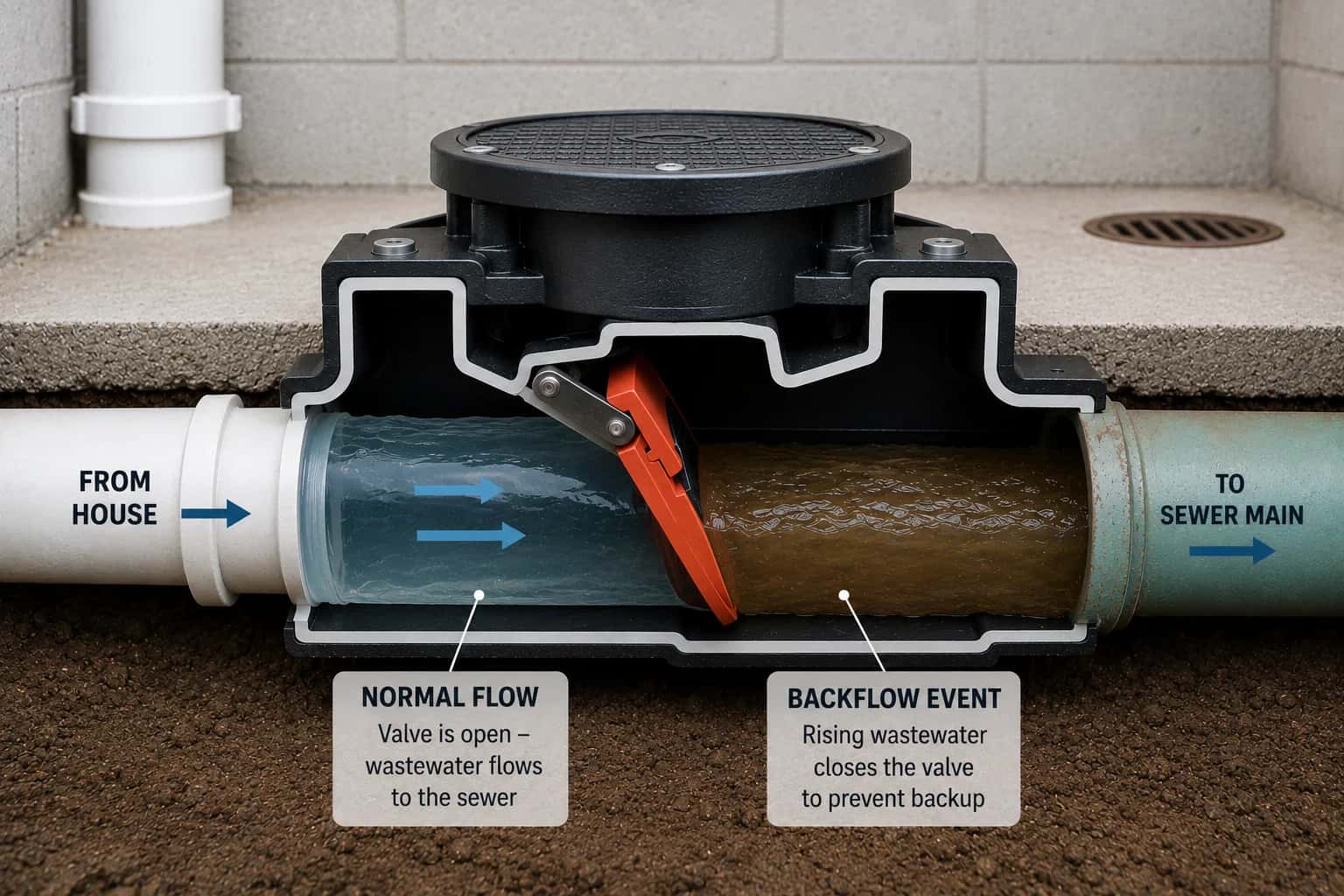
Backwater valves are designed for that last scenario. They’re not a general flood gadget and they’re not a cure-all for wet basements. A backwater valve is a one-way device installed on the home’s sanitary sewer line that allows wastewater to flow out to the municipal sewer, then closes automatically if sewage tries to flow back into the house during a surcharge event. That single function—blocking reverse flow—can be the difference between a bad storm and a full sewage cleanup when neighbourhood sewers are overloaded, as explained in Square One’s guide to backwater valves.
What makes this topic tricky is that the valve itself is only one part of a successful project. In many Canadian retrofits, the device ends up under the basement slab, and the “real work” is the access, the concrete, the restoration, and ensuring the valve remains reachable for inspection and cleaning later. Add in permits, inspections, and the documentation rules that come with municipal subsidies, and it quickly becomes the kind of project that benefits from planning—especially if you have a finished basement or you’re about to invest in one.
This guide walks through backwater valves the way most homeowners actually need it: how they work, where they typically go, the situations where they’re worth prioritizing, what the true cost drivers are, and how to think about installation quality and maintenance without turning this into a DIY manual. If you’re in a city with rebate programs, we’ll also cover what tends to be required so you can line up the paperwork before you start breaking concrete.