If you’ve ever watched your outdoor heat pump on a cold day and thought, “Why is the fan off… and why is it steaming?” you’re not alone. Defrost cycles can look dramatic: a sudden whoosh, the outdoor fan stopping, a plume of mist, and sometimes a short period where indoor air feels less warm. For many homeowners, that’s the moment you start wondering whether the system is wasting power—or failing.
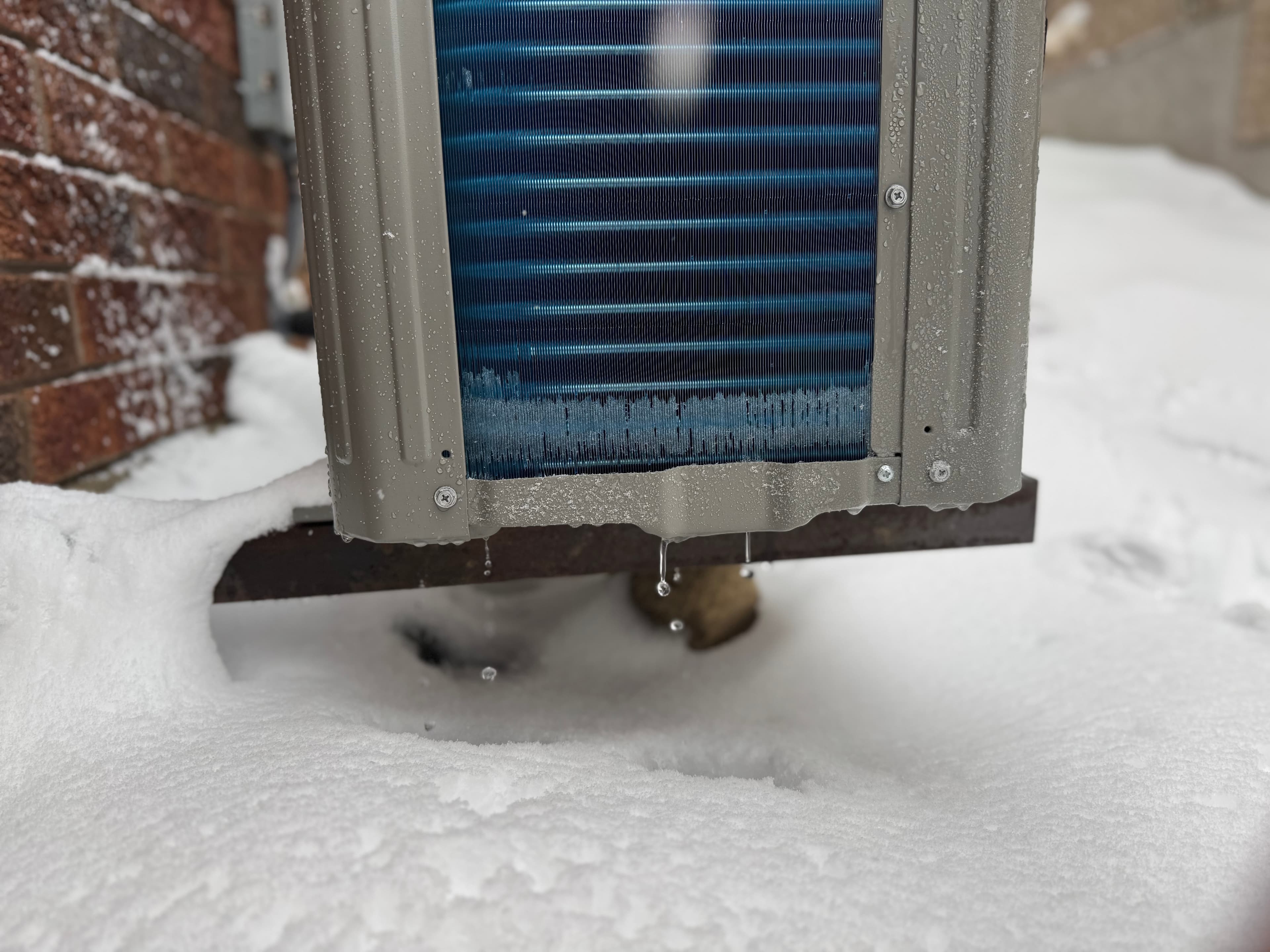
Here’s the key idea: defrost isn’t a bug. It’s a feature that keeps the outdoor coil from becoming a frosty, ice-insulated block. When frost coats the coil, the heat pump can’t absorb heat from outdoor air as effectively, and the system has to work harder to deliver the same comfort; in Lennox’s explanation of the defrost cycle guidance, that frost layer is specifically described as acting like insulation that reduces efficiency and strains the unit.
At the same time, defrost can become wasteful—or signal a real fault—when it’s happening too often, running too long, or failing to clear ice. That’s where homeowners get stuck: what’s “normal winter behaviour,” and what’s “call for service” behaviour?
This article gives you a practical framework that doesn’t require gauges, apps, or technical training. You’ll learn what defrost is, what normal looks like (with realistic ranges), what patterns suggest waste, and a step-by-step method to spot problems—especially in Canadian conditions where snow, wind, and freeze-thaw cycles can make or break performance.